
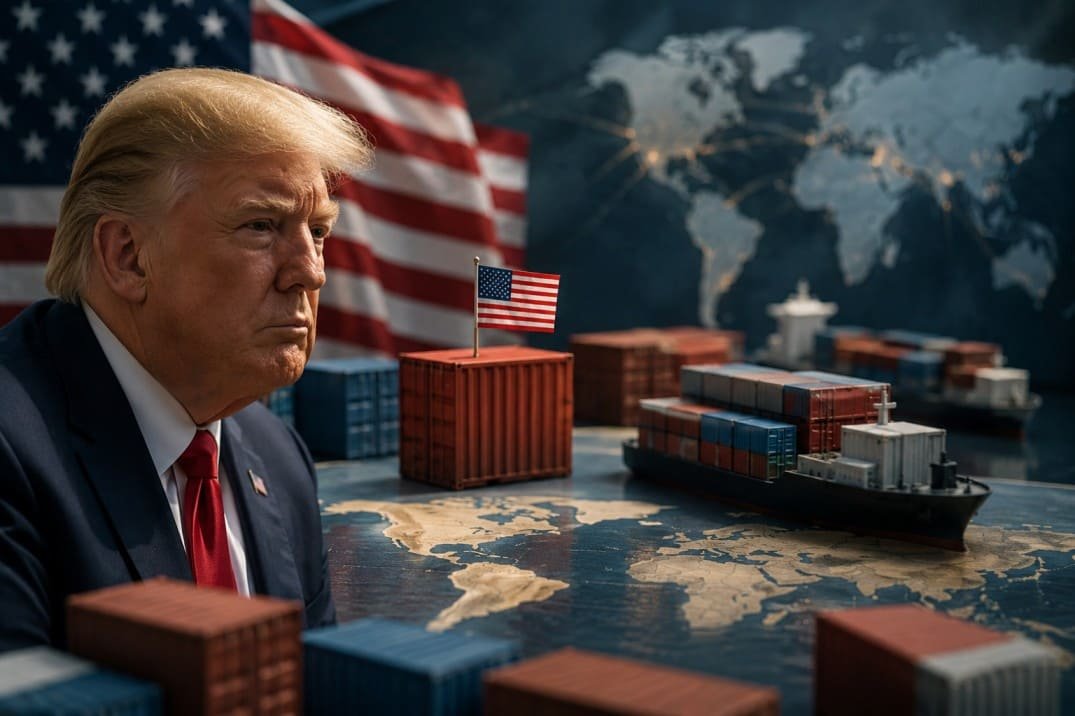
The landscape surrounding Donald Trump global trade tariffs has pivoted from broad executive surcharges to targeted statutory duties,such as Section 301 forced-labor levies and Section 338 actions,following key judicial reviews. Importers and global supply networks are navigating these changing duties by restructuring supply chains and monitoring real-time policy adjustments.
Trump Tariffs has been top in the news
The application of Donald Trump global trade tariffs entered a critical transition phase in mid-2026. Following a Supreme Court ruling that struck down broad emergency tariffs under the International Emergency Economic Powers Act (IEEPA), the federal government began issuing approximately $166 billion in tariff refunds to domestic importers. To maintain policy continuity, a temporary 10% global tariff was instituted under Section 122 of the Trade Act of 1974.
Read our analysis on US–Iran Tensions Rising: Fuel Prices & Shipping Routes Impact to understand how developments around the Strait of Hormuz could affect oil prices, shipping costs, and international supply chains.
As these temporary measures expire, federal trade policy is shifting toward specialized statutory mechanisms. Recent announcements from the U.S. Trade Representative (USTR) detail fresh targeted levies, including 10% to 12.5% duties on dozens of trading partners under Section 301 forced-labor investigations.
Additionally, new actions targeting specific sectors,such as a 25% duty on select Brazilian imports and proposed 50% tariffs on key Canadian goods,underscore a strategic emphasis on targeted bilateral leverage. For ongoing updates on regulatory filings, refer to official press statements published on the U.S. Trade Representative Website.
Analysis of Trump tariffs and its impacts
To manage the ongoing evolution of Donald Trump global trade tariffs, businesses and supply chain managers can evaluate the following operational strategies:
- Identify Duty Mechanisms: Determine whether imported components fall under Section 232 (metals), Section 301 (unfair trade/forced labor), or Section 338 statutory provisions. Wikipedia
- Audit Customs Classification (HTS): Verify origin rules and “melted and poured” or “smelted and cast” requirements to ensure accurate classification and mitigate unexpected penalties. Wikipedia
- Evaluate Regional Diversification: Consider shifting assembly or sourcing to locations with lower baseline rates or established bilateral agreements.
- Track Exemption Windows: Capitalize on temporary exemptions or grace periods,such as the two-year zero-tariff buffer on generic pharmaceuticals preceding scheduled increases.
Countries are increasingly investing in technology and automation to remain competitive. Learn more in Best Autonomous AI Agents to Replace Manual Work
Overview of Active and Upcoming Duty Structures
| Target Sector / Region | Rate Structure | Core Statutory Basis | Primary Impacted Industries |
|---|---|---|---|
| Metals & Raw Materials | 25% – 50% | Section 232 | Steel, aluminum, copper, heavy equipment |
| Section 301 Partners | 10% – 12.5% | Section 301 (Forced Labor) | General consumer goods, apparel, electronics |
| Generic Pharmaceuticals | 0% (escalating to 100%+) | Executive Directive / Sec. 232 | Medical manufacturing, active ingredients |
| Select Country Actions | Up to 50% | Section 338 & Bilateral Proclamations | Automotive, timber, agricultural products |
FAQ Block
Frequently Asked Questions
How do Donald Trump global trade tariffs impact everyday consumer prices?
When Donald Trump global trade tariffs are levied on imported finished goods or primary materials (such as steel and aluminum), domestic importers pay the duty upon entry. Importers often pass a portion of these increased input costs down the supply chain, which can result in higher retail prices for finished items like electronics, vehicles, and packaged goods.
What is the difference between Section 301 and Section 232 tariffs under Donald Trump global trade tariffs?
Under the framework of Donald Trump global trade tariffs, Section 232 levies focus on national security concerns, primarily targeting raw materials like steel, aluminum, and copper. Section 301 tariffs focus on addressing unfair trade practices, foreign subsidies, intellectual property issues, or forced labor standards across broader commercial categories.
Changes in U.S. tariffs can affect India’s exports, manufacturing, and investment climate, particularly in rapidly growing economic hubs featured in Wealth Engines of the Nation: The Top 10 Richest Cities of India.
How are businesses adapting to changing Donald Trump global trade tariffs?
Businesses adapt to Donald Trump global trade tariffs by auditing their Harmonized Tariff Schedule (HTS) codes, applying for official product exclusions where eligible, nearshoring manufacturing closer to end markets, and diversifying raw material sourcing to countries with lower statutory tariff exposure.

Leave a Reply