
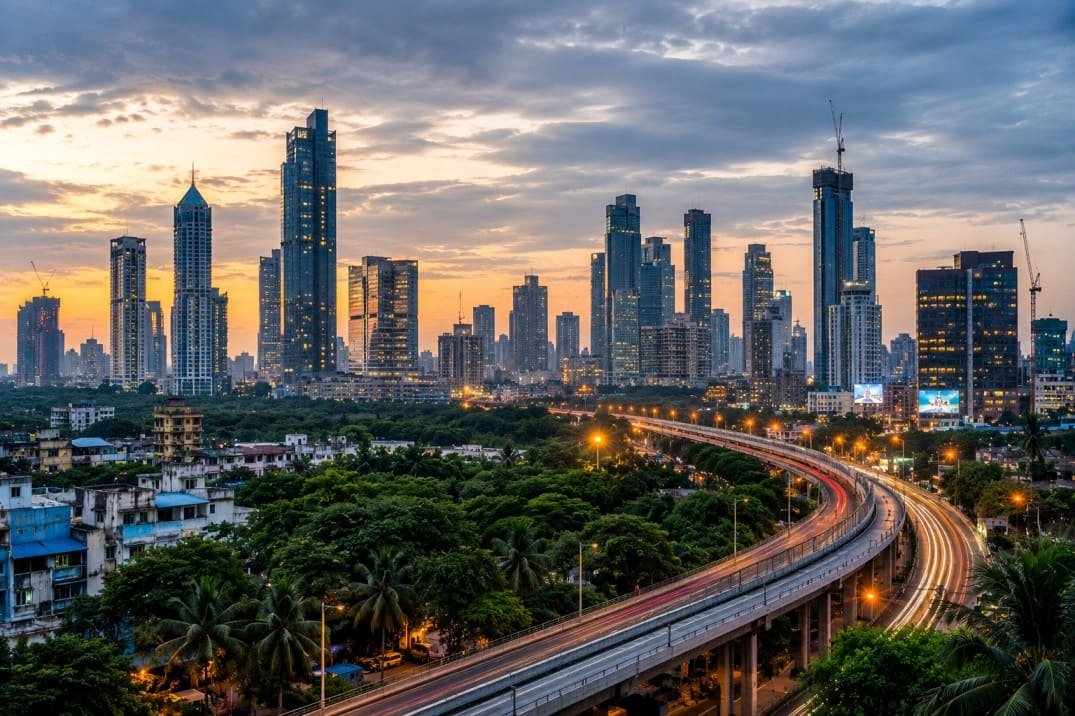
India’s phenomenal economic ascent is anchored firmly in its rapidly transforming urban powerhouses. As the country secures its position as one of the fastest-growing major economies globally, its metropolitan centers act as primary engines of wealth, innovation, and massive infrastructure capital.
Examining the top 10 richest cities of India reveals more than just staggering fiscal metrics; it uncovers the diverse industrial frameworks driving subcontinental growth. From the sprawling financial corridors of the west to the high-tech innovations of the southern valleys, these urban centers represent the economic backbone of a global superpower.
Unmatched Financial Power: The Undisputed Economic Leadership of Mumbai
Sitting comfortably at the pinnacle of the list is Mumbai, the undisputed financial capital and the absolute leader among the top 10 richest cities of India. Generating a massive estimated Gross Domestic Product exceeding 310 billion dollars, the city acts as the primary nerve center for corporate India. The staggering economic concentration within this metropolis is anchored by crucial institutional pillars such as the Reserve Bank of India, the Bombay Stock Exchange, and the National Stock Exchange of India. These financial systems manage the country’s capital flows, establishing Mumbai as a critical gateway for global corporate interests.
The economic landscape of Mumbai thrives on its impressive sectoral diversity. While banking, asset management, and corporate headquarters provide a steady foundation of institutional wealth, the presence of the entertainment sector adds a unique layer of high-value cultural economy. The metropolitan area houses over twenty-eight thousand millionaires and dozens of prominent billionaires, manifesting its affluent lifestyle through ultra-luxury residential enclaves. This constant concentration of human capital and entrepreneurial energy ensures that the city maintains a substantial lead over all other urban regions, acting as a massive magnet for ambitious professionals seeking unparalleled wealth-generating opportunities.
Administrative Stability and Corporate Expansion: The Roaring Success of Delhi NCR
Securing the second position in the national ranking is Delhi NCR, a vast socioeconomic region that seamlessly blends administrative authority with modern corporate expansion. Boasting a robust estimated GDP hovering around 293 billion dollars, the national capital region highlights how public sector governance can co-exist with a massive, dynamic private sector marketplace. The inclusion of thriving satellite hubs like Gurugram and Noida has effectively supercharged the region’s overall financial profile, turning it into a preferred destination for global tech firms and multinational conglomerates.
The primary strength of Delhi NCR lies in its highly diversified economic pillars. Beyond the traditional public administration and government services that naturally anchor the capital, the region has transformed into a major center for logistics, retail trade, and consumer goods manufacturing. The rapid development of world-class expressway networks and metro infrastructure has enabled unparalleled connectivity, allowing commercial ecosystems to flourish across state borders. This corporate maturity, paired with an expanding consumer base, positions Delhi NCR as a formidable wealth engine capable of rivaling the absolute highest tiers of global urban productivity.
India’s wealthiest cities are also emerging as technology and infrastructure hubs. Read our analysis of Top Data Centers Driving the AI Economy to understand how digital infrastructure is reshaping urban economies.
Innovation Capital of South Asia: The Tech Revolution in Bengaluru
Often celebrated globally as the Silicon Valley of India, Bengaluru occupies a vital position among the top 10 richest cities of India with an estimated GDP of 110 billion dollars. The transition of this Southern metropolis from a peaceful city into a fast-paced technology center is a testament to the power of human capital and strategic vision. By hosting thousands of active startups, tech companies, and multinational research facilities, the city has created an ecosystem that thrives heavily on intellectual property and global software exports.
The wealth generation in Bengaluru is deeply unique, driven by an impressive concentration of tech millionaires, venture capitalists, and young engineering talent. The city’s thriving corporate real estate market features major commercial hubs like Whitefield and Electronic City, which continue to draw billions in international capital investments. Furthermore, the rapid growth of advanced aerospace engineering, biotechnology research, and artificial intelligence development ensures that the local economy remains at the very forefront of future global wealth creation, solidifying Bengaluru’s status as a critical driver of modern Indian prosperity.
Industrial Resiliency and Modern Transformation: The Balance of Chennai
Reigning as a major industrial pillar of Southern India, Chennai stands tall in the economic ranking with an estimated GDP surpassing 78 billion dollars. Widely known as the Detroit of India due to its massive automobile manufacturing ecosystem, the city hosts prominent global vehicle manufacturers and auto-component export facilities. This traditional manufacturing strength is perfectly complemented by deep-water maritime trade infrastructure, with ports that channel substantial international trade across the Indian Ocean networks.
However, Chennai’s economic model extends far beyond heavy industry. The city has undergone a profound modern transformation, developing a highly successful software services sector, healthcare industry, and electronic manufacturing hubs. This balance between industrial manufacturing and high-value tech services provides Chennai with a highly resilient economy that remains insulated against localized market corrections. The disciplined urban expansion, high literacy rates, and strong engineering culture ensure that the capital of Tamil Nadu continues to anchor national industrial growth with exceptional stability.
As cities become wealthier, they also face climate challenges. Europe’s Heatwave Shows the Cost of Climate Change.
Pharmaceuticals and Digital Growth: The Rise of Hyderabad
Hyderabad has witnessed an extraordinary economic transformation over the past two decades, climbing steadily into the premier ranks with an estimated GDP reaching 75 billion dollars. Affectionately known as the City of Pearls due to its historic merchant legacies, modern Hyderabad owes its current economic dominance to two highly sophisticated sectors: pharmaceuticals and information technology. The creation of dedicated tech corridors like HITEC City and massive biotech hubs like Genome Valley has turned the city into a preferred global investment destination.
The local administration’s aggressive push toward infrastructure modernization—characterized by sprawling ring roads and state-of-the-art corporate layouts—has successfully attracted some of the largest tech companies in the world. From global cloud computing centers to advanced aerospace ventures, the city has cultivated a highly competitive business environment. This economic momentum shows no signs of slowing down, as the constant influx of high-skilled human resources drives both luxury real estate demand and the continuous growth of consumer service sectors.
Legacy Networks and Strategic Access: The Cultural Commerce of Kolkata
Kolkata holds an invaluable position among the top 10 richest cities of India, leveraging an estimated GDP of 150 billion dollars to maintain its status as the prime economic gateway to Eastern India. Often described primarily through its rich artistic and cultural contributions, the city possesses a deep-rooted mercantile framework that has sustained its regional leadership for over a century. Its geographical positioning allows it to command crucial trade routes connecting the national mainland with neighboring countries like Bangladesh, Nepal, and Bhutan.
The economic structure of Kolkata is anchored by major heavy industries, including steel manufacturing, mining conglomerates, tea trading boards, and legacy textiles like jute. In recent times, the metropolitan area has aggressively updated its financial profile by developing modern software services hubs in areas like Salt Lake Sector V and New Town. By combining traditional maritime trade operations through the oldest working port in the country with modern digital services, Kolkata maintains a distinct, resilient economic balance that continues to support millions of livelihoods across the eastern subcontinental landscape.
Manufacturing Integration and Advanced R&D: The Kinetic Growth of Pune
Positioned as a powerful economic twin to the state capital, Pune contributes a significant 69 billion dollars to the national financial landscape. Long recognized as an academic destination, the city has seamlessly integrated its rich human capital with modern heavy industry and advanced information technology services. The establishment of expansive industrial zones like Hinjewadi and Hadapsar has successfully drawn massive corporate tech parks and major international automotive manufacturing units.
The unique economic signature of Pune relies heavily on its robust research and development ecosystem, particularly in defense technologies, engineering solutions, and advanced biotechnology. The presence of numerous premier educational institutes provides local businesses with a constant stream of highly trained professionals, reducing operational costs and driving home-grown startup innovation. This powerful combination of heavy engineering, digital software platforms, and steady infrastructure expansion ensures that Pune maintains its high-ranking status among India’s premier wealth hubs.
Industrial Clusters and Textile Dominance: The Enterprise of Ahmedabad
Ahmedabad stands proud as the primary economic powerhouse of Gujarat, commanding an estimated GDP of 68 billion dollars. Historically celebrated as the Manchester of India due to its world-class textile manufacturing clusters, the modern city has successfully diversified into heavy chemical production, pharmaceuticals, and diverse small-scale manufacturing enterprises. The city’s legendary business environment is characterized by a strong culture of local entrepreneurship and highly proactive industrial governance.
The rapid development of modern commercial corridors, along with the strategic development of the nearby GIFT City project, has further elevated Ahmedabad’s long-term economic prospects. The city serves as a major logistical hub, connecting the rich agricultural and manufacturing outputs of Western India with major maritime ports. This high concentration of industrial efficiency, combined with minimal corporate friction and extensive infrastructure initiatives, guarantees that Ahmedabad remains a highly profitable center for domestic manufacturing and international trade investments.
Global Gems Processing and Export Agility: The Velocity of Surat
Surat represents one of the most remarkable stories of targeted economic specialization and jaw-dropping urban growth anywhere in Asia, yielding a GDP of 59.8 billion dollars. Universally recognized as the Diamond City, Surat dominates the global diamond cutting and polishing market, processing an astonishing majority of the world’s rough gemstones. This highly profitable, export-oriented industry is perfectly complemented by a massive synthetic textile sector that supplies ethnic apparel across the globe.
The local workforce is characterized by a highly adaptive entrepreneurial spirit, which has allowed small-scale manufacturing units to seamlessly scale into major international trading entities. The city’s modern infrastructure development, highly optimized logistical networks, and constant business-friendly policies have ensured consistent annual growth rates. By maintaining its absolute global monopoly in gemstone processing while continuously scaling its textile infrastructure, Surat secures a prominent position among the nation’s wealthiest urban zones.
Maritime Trade Portals and Logistics Networks: The Rise of Visakhapatnam
Rounding out the premier list is the coastal city of Visakhapatnam, which generates an estimated GDP of 43.5 billion dollars. Known as the City of Destiny, this major urban hub serves as a critical economic anchor for the eastern and southern maritime corridors. The city’s deep-water port facilities handle massive volumes of international cargo, ranging from natural minerals and heavy metals to complex petrochemical products.
The primary economic drivers of Visakhapatnam include extensive public sector steel plants, large-scale shipbuilding yards, fertilizer manufacturing units, and a rapidly growing pharmaceutical cluster. In recent years, the local administration has made substantial efforts to develop dedicated software services parks and modern IT infrastructure along its coastal stretches. This combination of heavy coastal manufacturing, maritime shipping networks, and rising digital services ensures that Visakhapatnam remains a highly dynamic, rising star in the nation’s overall wealth map.
Economic growth is closely linked with national priorities. Explore Why Sonam Wangchuk Is Fighting for India’s Future to see how sustainable development is becoming part of India’s growth story.
Conclusion
The remarkable trajectory of the top 10 richest cities of India highlights a larger story of national resilience, economic diversity, and rapid modernization. These urban powerhouses are no longer just regional administrative capitals or localized trading centers. Instead, they have transformed into crucial global nodes of commerce, technology, and industrial innovation. From the high-stakes financial trading floors of Mumbai to the cutting-edge software parks of Bengaluru and the massive maritime ports of Visakhapatnam, each city plays a distinct and irreplaceable role in fueling the country’s rise as a global economic superpower.
As India continues to execute major infrastructure initiatives, the economic boundaries of these wealth engines will undoubtedly expand, bringing even greater prosperity to their surrounding regions. The success of these metropolitan giants demonstrates that when local entrepreneurship is supported by modern infrastructure and progressive policy-making, the potential for wealth creation is virtually limitless. Keeping a close eye on how these cities adapt to future technological shifts and climate challenges will be key to understanding the next chapters of India’s unfolding economic growth story.

Leave a Reply