
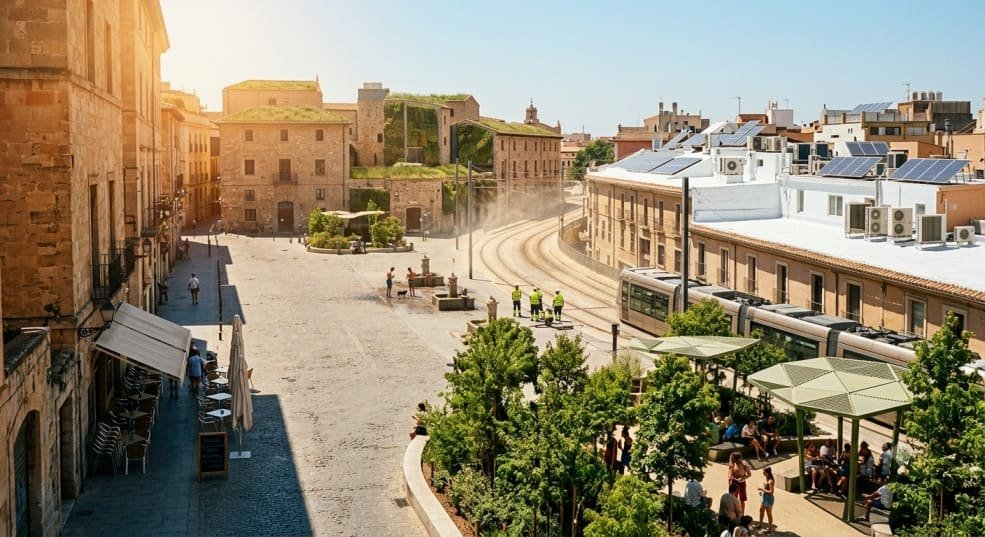
Intense summer temperatures across the continent are no longer viewed as isolated weather events,they have triggered a permanent social and structural evolution. From the UK down to the Mediterranean basin, the direct Europe extreme heat impact on daily life is forcing municipal leaders, corporate employers, and residents to abandon centuries-old traditions in favor of survival-first routines.
Data from the Copernicus Climate Change Service confirms that Europe continues to warm at nearly double the global average rate, with recent heat domes pushing localized temperatures past 43°C (109°F) in Western Europe and breaching 48°C in parts of Southern Italy.
Intense summer temperatures across the continent are no longer viewed as isolated weather events. As global warming accelerates, the long-term effects are becoming more visible, much like the environmental changes explored in Dubai’s climate transformation.
How Climate Change Is Shifting European Lifestyle and Work Habits
The most immediate manifestation of how climate change is shifting European lifestyle patterns is the decay of the classic 9-to-5 workday. To protect laborers from severe thermal stress, outdoor sectors like construction, delivery services, and agriculture are shifting shifts to early dawn hours.
Beyond manual labor, household routines are adjusting to combat persistent “tropical nights”,where overnight lows fail to dip below 20°C (68°F). Key behavioral shifts include:
- The Modern Siesta: Northern European cities are adopting midday operational pauses, encouraging flexible remote working during peak afternoon heat.
- Shifted Social Hours: Public dining, retail, and outdoor exercise are moving almost exclusively to late-evening hours.
- Coolcationing Trends: Traditional July-August vacations to Southern European coasts are declining as tourists shift toward cooler northern destinations like Scandinavia and high-altitude alpine regions.
European Heatwave Infrastructure Disruption: Grids and Transit Under Strain
The systemic nature of European heatwave infrastructure disruption stems from a structural reality: much of Europe’s building stock and transport network was historically designed to retain heat rather than dissipate it.
According to climate scientists, rising temperatures are affecting regions worldwide, reinforcing concerns highlighted in how heatwaves are becoming more frequent and severe.
The World Meteorological Organization notes that rising heat stress poses severe challenges to critical public systems:
- Energy Grid Overloads: Rapid uptake of residential air conditioning,a service once considered a luxury across Central Europe,is putting unprecedented strain on local power networks.
- Transit Delays: Steel railway tracks routinely face thermal expansion and risk buckling under direct exposure, forcing rail operators to enforce systemic speed restrictions.
- Urban Surface Damage: Asphalt highways and tarmac runways are prone to softening under sustained temperatures over 40°C, causing costly logistics delays.
Climate Adaptation in European Cities: Building for a Warmer Future
To counter the growing threat of urban heat islands, climate adaptation in European cities has moved from policy discussion to immediate architectural execution. Urban centers,where dark tarmac and concrete can elevate temperatures by 3°C to 5°C relative to surrounding countryside,are deploying nature-based and technological solutions.
- Cooling Refuges: Cities like Paris and Barcelona have mapped network-wide “climate shelters”,air-conditioned public buildings, shaded parks, and misting centers located within a 10-minute walk for all residents.
- Green Infrastructure: Urban greening initiatives, including living roofs, micro-forests, and de-paving initiatives, are actively lowering surface temperatures.
- Reflective Urban Design: Municipalities are recoating rooftops with reflective white sealants and installing solar canopy shading over public parking zones and walkways.
A New Baseline for the Continent
Understanding why Europe’s extreme heat is changing everyday life requires recognizing that these climate conditions represent a baseline shift rather than a temporary emergency. As European heatwaves grow longer, hotter, and earlier in the season, the ongoing alignment of labor laws, transport engineering, and urban design marks a historic turning point in how Europeans navigate summer .The same record-breaking temperatures driving Europe’s extreme heat are also causing rapid ice loss in mountain regions and polar areas. Learn more in Why Glaciers Are Melting Faster Than Ever Before, which explains the science behind this growing climate crisis.

Leave a Reply