
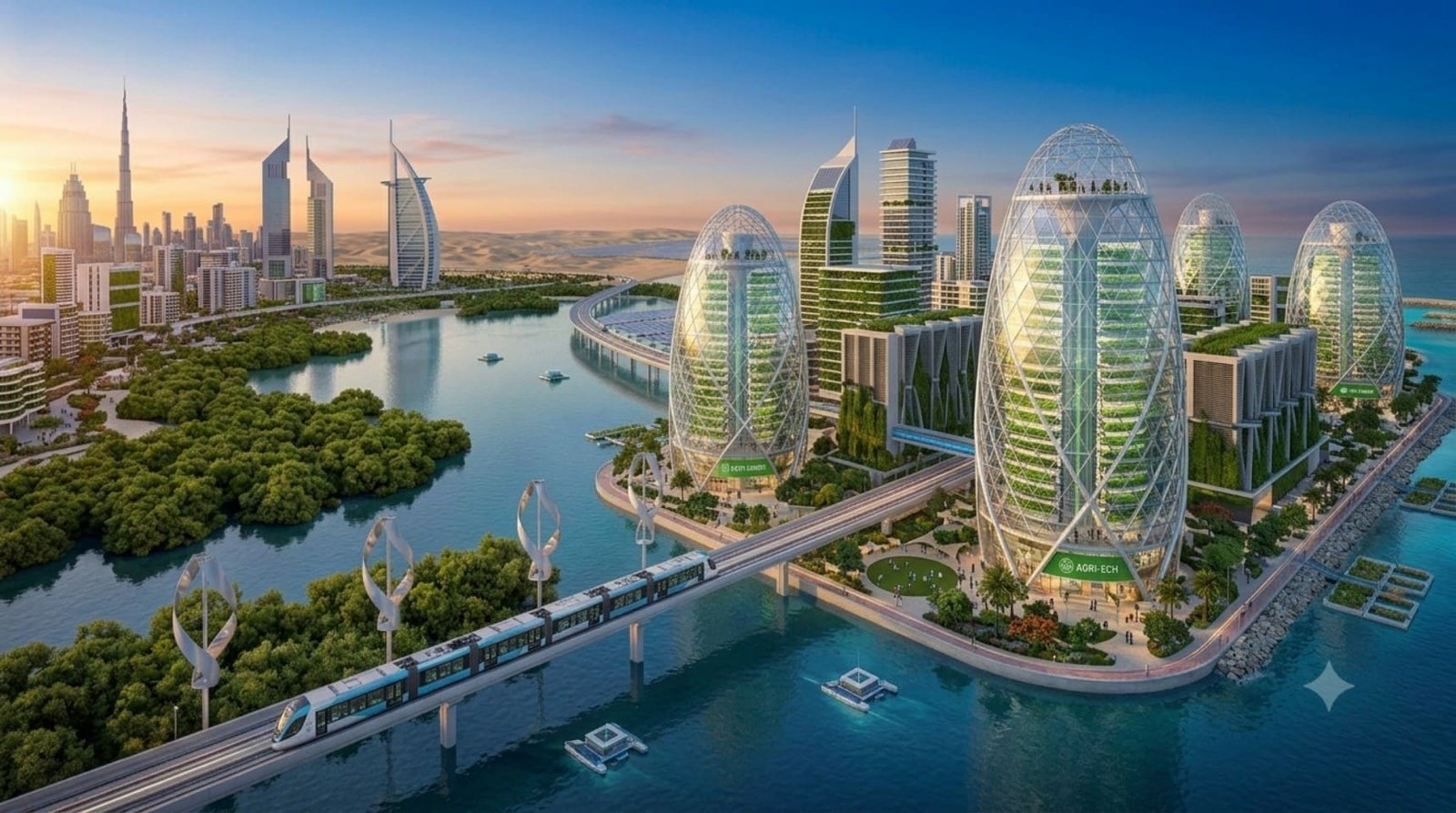
The skyline of Dubai stands as a testament to human ingenuity, rising from an arid desert landscape into a global hub of finance, tourism, and architectural wonder. However, this rapid modern expansion is facing its most complex challenge yet: global warming. As a coastal city surrounded by a naturally hyper-arid desert environment, the emirate is uniquely positioned on the front lines of global climate variations. Exploring how this modern metropolis handles these growing challenges reveals a balance between environmental pressure and proactive, technology-driven adaptation.
Is Dubai Affected by Global Warming?
When examining the regional landscape, the fundamental question must be asked: Is Dubai affected by global warming? The analytical data shows a clear trend of accelerating environmental pressure. Over the last few decades, the Arabian Gulf region has experienced noticeable increases in average baseline temperatures. Baseline temperature modeling reveals that regional sea surface temperatures have risen steadily by 0.2 to 0.6 degrees Celsius every ten years, fueling more intense heat loops and unpredictable weather patterns across the United Arab Emirates.
Global sporting events are also facing increasing environmental challenges. Read our analysis of the FIFA Decision on Argentina: Disciplinary Probe & 2030 Status.
Climate Change in Dubai and UAE Climate Change Realities
Evaluating climate change in Dubai presents itself through a series of specific, interconnected environmental shifts. The city faces elevated summer temperatures, changing winter precipitation patterns, and a higher frequency of localized dust storms. These macro-climatic changes are no longer distant forecasts; they directly influence real estate design, energy consumption patterns, and municipal planning. This reality means that UAE climate change is a present operational challenge that requires consistent structural solutions across all public and private sectors.
Furthermore, the emirate’s geographic position makes it vulnerable to secondary climate effects, such as potential sea-level rises in the Persian Gulf. With billions of dollars invested in low-lying coastal developments, luxury resorts, and marine infrastructure, any notable changes in sea levels could impact maritime safety and coastal property stability. This makes long-term coastal planning a core component of the city’s defensive design.
The effects of rising temperatures are no longer limited to the Middle East. Across Europe, prolonged heatwaves are transforming work schedules, tourism, and city planning, as explored inunderstanding the new geopolitics of oil and who controls the world’s energy is increasingly important for understanding the UAE’s long-term economic and sustainability strategy.
Will Dubai Become Too Hot to Live in? Managing Dubai Extreme Heat
As global baseline temperatures rise, researchers and urban planners frequently evaluate a critical long-tail question: Will Dubai become too hot to live in? During the peak summer months, local temperatures can exceed 45 degrees Celsius, with high humidity levels pushed inland from the surrounding gulf waters. Under business-as-usual emissions scenarios, Dubai extreme heat waves could test the physical limits of outdoor activity.
Climate change is putting historic landmarks under increasing pressure. Learn more about UNESCO’s six World Heritage Sites added to the Danger List in 2026.
The Long-Term Future of Dubai Climate
This reality shapes the long-term outlook for the future of Dubai climate. The city faces a real threat of extended summer periods, which increases the thermal strain on public utility networks, transport infrastructure, and outdoor labor forces. This shift has turned the discussion around urban sustainability into an essential strategy for long-term survival.
To counter these severe conditions, the city’s architecture is moving away from purely aesthetic glass structures toward climate-adapted engineering. Advanced cooling technologies, heat-reflective exterior coatings, and shaded pedestrian walkways are being integrated into the urban fabric to create self-contained microclimates. These innovations are designed to ensure that the city remains safe and functional, even during periods of intense summer heat.
Can Dubai Survive Climate Change? Advancing Dubai Climate Resilience
The question of whether a desert metropolis can maintain its growth leads directly to another core consideration: Can Dubai survive climate change? The answer depends heavily on the city’s ability to decouple its economic activity from high carbon outputs while building resilient urban systems. Because the city relies heavily on energy-intensive air conditioning and water desalination, establishing robust Dubai climate resilience is vital to avoiding future resource shortages.
To ensure its long-term viability, the city is implementing extensive district cooling networks that consume up to 50 percent less energy than traditional decentralized air conditioning units. These systems work by pumping chilled water from central plants through insulated underground pipes directly into commercial and residential towers, drastically reducing the city’s peak electrical demand.
India rapidly expands its manufacturing sector, the country’s ambitious semiconductor investments are creating new sustainability challenges. Read Why $22B is Pouring Into India’s Chip Industry to understand how climate resilience and industrial infrastructure are becoming closely linked.
Additionally, urban planners are integrating green buffer zones and pocket parks designed to counteract the urban heat island effect. By replacing heat-absorbent asphalt and concrete with native, drought-resistant flora, these green corridors help lower localized air temperatures naturally. This demonstrates that the future of Dubai climate will be defined by its ability to merge engineering with ecological design.
How Is Dubai Fighting Climate Change? Launching Dubai Green Initiatives
Understanding the city’s comprehensive environmental strategy requires looking at the concrete policies under the question: How is Dubai fighting climate change? The emirate’s response relies on a mix of legislative mandates, green building standards, and multi-billion-dollar investments in clean technology. Rather than relying on retroactive fixes, the government has integrated environmental accountability directly into its primary economic planning models, including the Dubai Economic Agenda D33.
Driving Dubai Sustainability and Dubai Smart City Strategies
A central pillar of this defense is the implementation of Dubai green initiatives across public transport, waste management, and hospitality sectors to drive overall Dubai sustainability. The Dubai Department of Economy and Tourism regulates these shifts by requiring commercial properties and hotels to adhere to strict carbon-monitoring standards. This systematic transition from voluntary sustainability to mandatory environmental performance helps ensure that businesses reduce their resource footprints over time.
On a larger scale, the local transport framework is being transformed through the expansion of electric vehicle charging infrastructure and autonomous public transit networks built around modern Dubai smart city targets. By offering clear incentives for green transportation, the city aims to reduce emissions from daily commutes, addressing one of the major drivers of domestic carbon output.
Meeting Dubai Net Zero 2050 with Dubai Renewable Energy and Dubai Clean Energy
The framework for these environmental efforts is guided by a binding national commitment: Dubai Net Zero 2050. This initiative aligns the emirate’s local environmental laws with the broader UAE Net Zero by 2050 Strategic Initiative, making it the first country in the Middle East and North Africa region to commit to an absolute greenhouse gas reduction target.
Powering UAE Renewable Energy Projects and UAE Sustainability Initiatives
To meet these targets, the city is rapidly expanding its Dubai clean energy production capabilities using cutting-edge Dubai renewable energy frameworks. The primary driver of this transition is the Mohammed bin Rashid Al Maktoum Solar Park, a massive project designed to reduce the city’s reliance on imported natural gas. By integrating clean energy directly into the central electrical grid, the city is systematically lowering the carbon footprint of every home, office building, and factory operating within its borders.
This energy shift is supported by broader UAE sustainability initiatives and regional UAE renewable energy projects, which focus on scaling up solar installations, exploring wind power options along coastal areas, and developing green hydrogen generation facilities. These combined efforts serve to protect the local economy from global fossil fuel price volatility while building a resilient clean energy foundation.
Sustainable Development in Dubai: Green Buildings in Dubai Codes
The physical layout of the city is changing under the influence of sustainable development in Dubai. Urban planners have moved away from outdated construction models to embrace low-carbon building systems designed for harsh desert environments. This shift is guided by mandatory green buildings in Dubai codes, such as the Al Sa’fat regulations, which require all new construction projects to meet strict metrics for thermal insulation, energy-efficient lighting, and recycled building materials.
Deploying Dubai Water Conservation to Manage Dubai Environmental Challenges
In an ultra-arid environment, managing water security is just as critical as reducing carbon emissions or solving physical Dubai environmental challenges. As climate change alters traditional rainfall patterns, implementing advanced Dubai water conservation methods has become a core priority for municipal authorities. Historically, the city has relied on energy-intensive thermal desalination plants; however, the utility sector is shifting toward reverse osmosis technologies powered by solar arrays, cutting the carbon cost of clean water production.
At the municipal level, wastewater treatment facilities have been upgraded to achieve high recycling rates. Treated sewage effluent is redirected into extensive underground irrigation networks, providing water for public parks, green buffers, and industrial cooling lines without draining natural groundwater aquifers. This emphasis on circular water management helps protect the city from severe water stress.
Simultaneously, the city is investing in major ecological restoration programs to protect its coastlines from erosion and rising sea levels. The Dubai Reef project focuses on installing large-scale artificial reef structures across the coast to restore marine biodiversity, stabilize fish stocks, and create natural barriers against wave energy. These marine projects are paired with mangrove reforestation efforts along coastal lagoons, using native plants as natural carbon sinks and storm buffers.
Future Horizons: Reviewing Dubai Sustainability Projects
The long-term strategy for the city relies heavily on a growing pipeline of high-profile Dubai sustainability projects. These developments show that the city views the climate transition not just as a compliance requirement, but as an opportunity to attract international green tech investments. This shift has helped position the emirate as a regional hub for climate technology innovation.
Among these large-scale investments are the green partnerships spearheaded by Masdar and the Dubai Electricity and Water Authority (DEWA). These collaborations focus on upgrading the existing grid with advanced battery energy storage systems (BESS), allowing the city to store excess solar energy generated during the day and deploy it at night, reducing the need for natural gas backup plants.
Additionally, the city’s Integrated Waste Management Strategy 2041 aims to divert waste from landfills entirely by investing heavily in recycling infrastructure and conversion technologies. The center of this plan is the Warsan Waste-to-Energy facility, which processes municipal solid waste to generate electricity for thousands of local homes. This project highlights how the city is turning everyday environmental challenges into productive economic assets.
Conclusion: Balancing Economic Growth with Environmental Survival
The ongoing evolution of the emirate shows that navigating global warming requires a combination of continuous innovation, strict civic regulation, and long-term capital investments. By acknowledging its vulnerabilities to extreme heat and climate variations, the city has designed a comprehensive roadmap toward sustainable urban development.
Through the implementation of Dubai sustainability projects, large-scale clean energy grids, and circular water systems, the city is actively working to protect itself against regional environmental pressures. While the challenges posed by a warming planet are significant, the city’s transformation into a technology-driven, climate-resilient hub provides an interesting case study for modern desert urbanization worldwide.

Leave a Reply