
The Deepening Obesity Crisis in India: Decoding a Modern Health Emergency
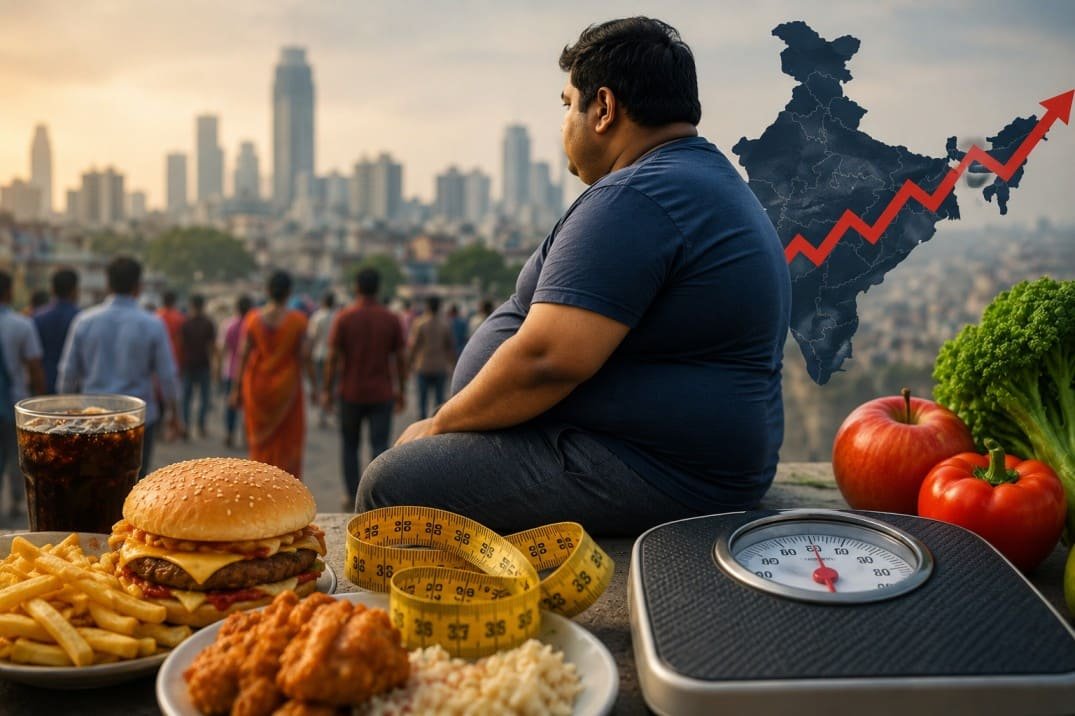
For generations, public health narratives surrounding South Asia focused almost entirely on undernutrition and resource scarcity. Today, the nation faces an unexpected and far more complex challenge. The rising obesity crisis in India has transformed from a localized urban issue into a sweeping national health emergency. Recent data from the National Family Health Survey indicates a sharp and alarming upward trajectory in overweight and obesity metrics across diverse socio-economic groups. The country is now forced to confront the harsh reality of the double burden of malnutrition, where undernutrition and overnutrition actively coexist within the same communities.
This sudden shift is not merely about expanding waistlines. It represents a profound transformation in how millions of people live, eat, and work. The structural changes brought by rapid economic expansion have outpaced the public health frameworks designed to protect citizens. Understanding the scale of this silent epidemic requires looking closely at the deep systemic shifts occurring within Indian homes and cities.
The Statistical Reality of Rising Obesity in India
The scale of the crisis becomes clear when examining national health metrics. According to data released through public health reports, nearly one in four adults is now classified as overweight or obese. This indicates a massive departure from historical baselines. What makes the current trend particularly concerning is how quickly these numbers have escalated over the past two decades. The transition from active, regional agricultural lifestyles to stationary electronic environments has left millions highly vulnerable to rapid weight accumulation.
Medical practitioners note that the standard metrics used globally often fail to capture the unique risks faced by South Asian populations. For a long time, standard global health frameworks relied on a uniform Body Mass Index baseline. However, the Indian consensus guidelines for adult weight management use lower thresholds. An individual in India is considered overweight when their index crosses a value of 23, and clinically obese once it reaches 25. This distinction is vital because South Asian physiology tends to accumulate fat around vital internal organs even at a lower overall body mass.
The economic implications of this shifting dynamic are staggering. Treating chronic conditions linked to high weight places a tremendous strain on household budgets and public health infrastructure. Millions of families face high out-of-pocket medical expenses for conditions that could be prevented through structural and environmental changes.
Why Urban Centers and Women Bear the He
The impact of this shifting health landscape is not felt equally across demographics. Comprehensive insights from the Global Obesity Observatory show that urban areas experience the highest concentrations of high body mass. In metropolitan centers, the availability of convenient high-calorie options combined with concrete environments that discourage walking creates a persistent risk. However, rural regions are catching up rapidly as processed goods become widely available in village shops.
The gender disparities within these statistics reveal deep societal imbalances. Studies indicate that urban women display noticeably higher rates of weight accumulation than men in similar geographic regions. This difference is deeply connected to structural inequalities and societal norms. In many households, women face constrained mobility, fewer opportunities for public outdoor exercise, and distinct dietary patterns where they eat last and consume highly processed convenience items while balancing intensive domestic labor and modern jobs.
Furthermore, metabolic changes during pregnancy and localized hormonal variations leave women more vulnerable to long-term weight retention. Without targeted, culturally sensitive support structures, women continue to experience the worst long-term outcomes of this escalating domestic crisis .Climate change is also affecting public health. Read our report on the Indian Himalayas during the monsoon.
The Tragic Rise of Childhood Obesity in India
Perhaps the most heartbreaking aspect of the modern health landscape is the rapid growth of childhood obesity in India. The percentage of young children and adolescents classified as overweight has surged dramatically over the past two decades. School environments, heavy academic pressures, and the pervasive nature of screen entertainment have effectively replaced traditional outdoor play for a generation of young people.
Public updates from organizations like UNICEF India show that early life factors contribute heavily to this trajectory. The widespread availability of sweetened beverages and low-nutrient snacks in school canteens establishes addictive eating habits early in life. These patterns alter a child’s metabolic baseline permanently, setting them up for chronic health challenges well before they reach adulthood.
Pediatricians warn that children carrying excess weight are highly likely to maintain that status into their adult years. Beyond the obvious physical risks, these children frequently experience severe social isolation, psychological distress, and low self-esteem due to structural stigma. This creates an urgent need for family-centric interventions that address nutritional habits long before they manifest as adult illness.
The Silent Threat of Metabolic Obesity with Normal BMI
A highly unique and dangerous element of the South Asian health profile is the phenomenon known as metabolic obesity. Millions of individuals across the country look relatively lean or maintain a standard body index, yet their internal biochemistry mirrors that of someone with severe clinical weight issues. This condition is characterized by a high percentage of visceral fat, which wraps around vital organs like the liver, pancreas, and heart.
This distinct phenotype means that looking thin does not guarantee medical safety. Individuals with hidden visceral accumulation face identical risks for cardiovascular disease and sudden metabolic failure as those who are visibly overweight. The underlying driver is a combination of genetic predisposition and a modern diet high in refined carbohydrates and unhealthy fats.
Because standard visual assessments fail to identify this risk, thousands of individuals remain undiagnosed until they experience a major cardiovascular event. This underscores the limitations of relying solely on the scales and highlights the need for advanced metabolic screenings at primary health centers.
Ultra-Processed Foods and the Nutrition Transition
The foundational cause of the obesity crisis in India lies in a structural shift known as the nutrition transition. Over a remarkably short period, the traditional Indian plate, characterized by high-fiber grains, fresh vegetables, pulses, and regional spices,has been largely replaced. In its place stands a multi-billion-dollar market dominated by ultra-processed foods India.
These commercial food items are scientifically engineered to be hyper-palatable. By combining precise ratios of refined sugars, industrial trans-fats, and high sodium, manufacturers create products that actively bypass natural fullness signals. The convenience of packaged instant noodles, ready-to-eat meals, and sweet carbonated drinks makes them highly attractive to busy professionals and low-income families alike.
The economic accessibility of these products complicates the issue further. While fresh fruits, high-quality proteins, and organic vegetables have become increasingly expensive, mass-produced processed foods remain cheap and shelf-stable. For millions of individuals surviving on tight budgets, these high-calorie, low-nutrient options become the most practical choice, leading directly to systemic malnutrition and weight gain.
Read how extreme heat is creating new public health challenges worldwide.
The Lancet Warns of a Looming Lifestyle Diseases Epidemic
The long-term medical consequences of this shift are already visible in clinics across the nation. International medical publications, including The Lancet Global Health, have highlighted that lifestyle diseases in India are developing at least a decade earlier than observed in Western populations. Conditions like type 2 diabetes, chronic hypertension, fatty liver disease, and advanced cardiovascular disease are increasingly common among individuals in their thirties and forties.
The link between metabolic weight gain and type 2 diabetes is exceptionally strong. The body fat accumulation triggers a cellular resistance to insulin, forcing the pancreas to work harder until it eventually fails to manage blood glucose levels. India has earned the unfortunate title of a global diabetes epicenter, with over a hundred million citizens currently living with the disease.
This reality creates a massive public health emergency. When a young adult develops a chronic condition in their prime working years, it limits their personal earning potential and reduces national economic productivity. The financial strain on public resources threatens to overwhelm the healthcare system over the coming decades.
Systemic Solutions for Sustainable Long-Term Recovery
Reversing this national trend requires moving far beyond the simplistic advice of telling individuals to eat less and move more. Public health experts at recent national medical conclaves emphasize that systemic challenges demand institutional responses. Individual willpower is ineffective when the surrounding environment is designed to promote sedentary behavior and poor nutrition.
Implement Mandatory Front-of-Pack Labeling (FOPL): Introduce clear, color-coded warning labels (such as traffic light systems) on ultra-processed foods to help consumers instantly identify high levels of sugar, sodium, and saturated fats.
Enact Fiscal Policies and Food Subsidies: Levy higher taxes on sugar-sweetened beverages and hyper-palatable packaged snacks while simultaneously subsidizing fresh fruits, vegetables, and regional whole grains to make healthy eating economically accessible.
Restrict Marketing to Children: Ban aggressive junk food advertising targeted at children on television, streaming platforms, and social media, and strictly prohibit the sale of processed foods within and around school premises.
Revamp Urban Infrastructure: Redesign metropolitan spaces to include safe, well-lit walking tracks, protected cycling lanes, and functional public parks, allowing residents to integrate natural movement back into their daily routines.
Mandate Nutritional Education in Schools: Integrate comprehensive food literacy and mandatory physical education into school curricula to establish healthy lifestyle habits and positive metabolic baselines from an early age.
Expand Healthcare Screening for Visceral Fat: Train primary healthcare workers to look beyond standard BMI scales and utilize waist-to-hip ratios to detect metabolic obesity and early-stage lifestyle diseases in seemingly lean individuals.
If the solutions are so clear, why hasn’t the government simply banned companies from manufacturing these ultra-processed foods?
The reality is deeply entangled in modern economics and food security logistics. The Indian government faces a delicate balancing act; mass-producing cheap, shelf-stable processed items ensures that a massive, rapidly urbanizing population has cheap access to calories, avoiding immediate food shortages. Furthermore, the food processing sector is a massive driver of economic growth, generating millions of jobs and attracting billions in foreign investment. Banning these products outright would trigger severe economic shockwaves and disrupt supply chains nationwide.
Instead of an outright ban, the path forward relies on tightening the regulatory leash. The state must use aggressive policy shifts,like heavy taxation on junk foods, mandatory health warnings, and advertising restrictions,to make producing and consuming unhealthy food less profitable. Until the environment changes structurally, the responsibility shifts back to the community. By reclaiming regional food traditions, demanding better infrastructure, and understanding the hidden metabolic risks on our plates, Indian citizens can actively protect their health even when the market fails to do so.
Leave a Reply