
The Strait of Hormuz has long been one of the world’s most strategically important waterways. Stretching just 33 kilometres (21 miles) wide at its narrowest point, this maritime passage connects the Persian Gulf to the Gulf of Oman and the Arabian Sea. Despite its relatively small size, it serves as a lifeline for global energy supplies, with roughly one-fifth of the world’s oil passing through it each day.
Whenever tensions rise in this narrow waterway, the consequences extend far beyond the Middle East. Oil prices fluctuate, shipping routes become uncertain, and global markets react almost immediately. The latest cycle of confrontation between the United States and Iran has once again brought the Strait of Hormuz into international focus, highlighting its role as both a strategic asset and a geopolitical flashpoint.
The dispute is not simply about ships navigating a busy sea lane. It reflects decades of political rivalry, military posturing, economic sanctions, and competing regional interests. Understanding why this waterway remains at the centre of global attention requires looking at its geography, history, and the events that led to the latest escalation.
According to the U.S. Energy Information Administration (EIA), around 20 million barrels of crude oil and petroleum products pass through the Strait of Hormuz every day, making it one of the world’s most critical energy chokepoints.
Why the Strait of Hormuz Matters to the World
The Strait of Hormuz is often described as the world’s most important oil transit route, and for good reason. Tankers carrying crude oil and liquefied natural gas from Saudi Arabia, Iraq, Kuwait, the United Arab Emirates, Qatar, and Iran rely on this narrow passage to reach international markets.Countries in Asia, including India, China, Japan, and South Korea, depend heavily on energy supplies transported through these waters. Any disruption can affect fuel prices, shipping costs, inflation, and economic growth worldwide.
The strategic importance of the strait has also made it a heavily monitored military zone. The United States maintains a significant naval presence in the region alongside allied forces, while Iran regularly conducts naval exercises and patrols through the waterway.
This combination of economic importance and military activity means that even relatively small incidents have the potential to trigger wider international crises.
o better understand how bilateral ties have evolved over the decades, read our detailed article on the India–Israel relationship
Understanding the History of US-Iran Tensions
The latest confrontation cannot be understood without examining the decades-long relationship between Washington and Tehran.
Relations between the two countries deteriorated dramatically after Iran’s 1979 Islamic Revolution, which led to the overthrow of the Western-backed Shah and the establishment of the Islamic Republic. Later that year, Iranian students seized the U.S. Embassy in Tehran, holding American diplomats hostage for 444 days.Since then, relations have remained strained. Economic sanctions, disagreements over Iran’s nuclear programme, regional proxy conflicts, and military incidents have repeatedly brought both countries close to direct confrontation.
Despite occasional diplomatic efforts, mistrust has continued to shape their relationship.
The partnership with Israel also reflects India’s broader diplomatic approach in an increasingly complex geopolitical landscape. Learn more about Trump’s foreign policy strategy
The Strait of Hormuz Dispute Became the Latest Flashpoint
Recent tensions escalated after increased military activity around commercial shipping routes in the Persian Gulf.The United States accused Iran of threatening freedom of navigation and endangering international shipping, while Iran argued that foreign military deployments near its coastline posed security risks.
Several commercial vessels reported security incidents, prompting insurance costs for shipping companies to rise sharply. Naval patrols were expanded, and surveillance operations intensified across the region.As diplomatic rhetoric became increasingly hostile, fears grew that a single miscalculation could escalate into a broader military confrontation.
Economic Sanctions Continue to Fuel the Conflict
Economic sanctions remain one of the central drivers of the dispute.
Over the years, successive U.S. administrations have imposed sanctions targeting Iran’s banking system, oil exports, shipping industry, and access to international financial markets. Washington argues that these measures are intended to limit Iran’s nuclear ambitions and reduce funding for regional militant groups.
Iran, however, views the sanctions as economic warfare that places immense pressure on its economy and civilian population. Tehran has repeatedly argued that restrictions on its oil exports violate its sovereign rights and has threatened to respond whenever it believes its interests are under attack.
This economic pressure has made the Strait of Hormuz an important bargaining tool in Iran’s broader geopolitical strategy.
Why Oil Markets React Immediately
Few geopolitical events influence global oil prices as quickly as developments in the Strait of Hormuz.Energy traders closely monitor every military exercise, diplomatic statement, and shipping incident because even the possibility of disruption can affect global supply expectations.
When tensions rise, oil prices often increase due to fears that exports from Gulf producers could be delayed or interrupted. Shipping companies may reroute vessels, increase security measures, or face higher insurance premiums, all of which contribute to increased transportation costs.
These higher costs eventually affect consumers through rising fuel prices and broader inflation.Countries heavily dependent on imported energy, including India, often monitor developments in the region with particular concern.
Military Presence Keeps the Region on Edge
The Persian Gulf remains one of the world’s most militarised regions.
The U.S. Navy regularly deploys aircraft carriers, destroyers, surveillance aircraft, and allied forces to maintain maritime security. Meanwhile, Iran’s Islamic Revolutionary Guard Corps Navy operates patrol boats, missile systems, drones, and coastal defence capabilities designed to monitor activity in and around the Strait of Hormuz.
Military exercises conducted by either side are closely watched by international observers because they can quickly influence diplomatic relations and financial markets.While both governments often state that they seek to avoid full-scale war, the close proximity of military assets increases the risk of accidental confrontations
Conclusion
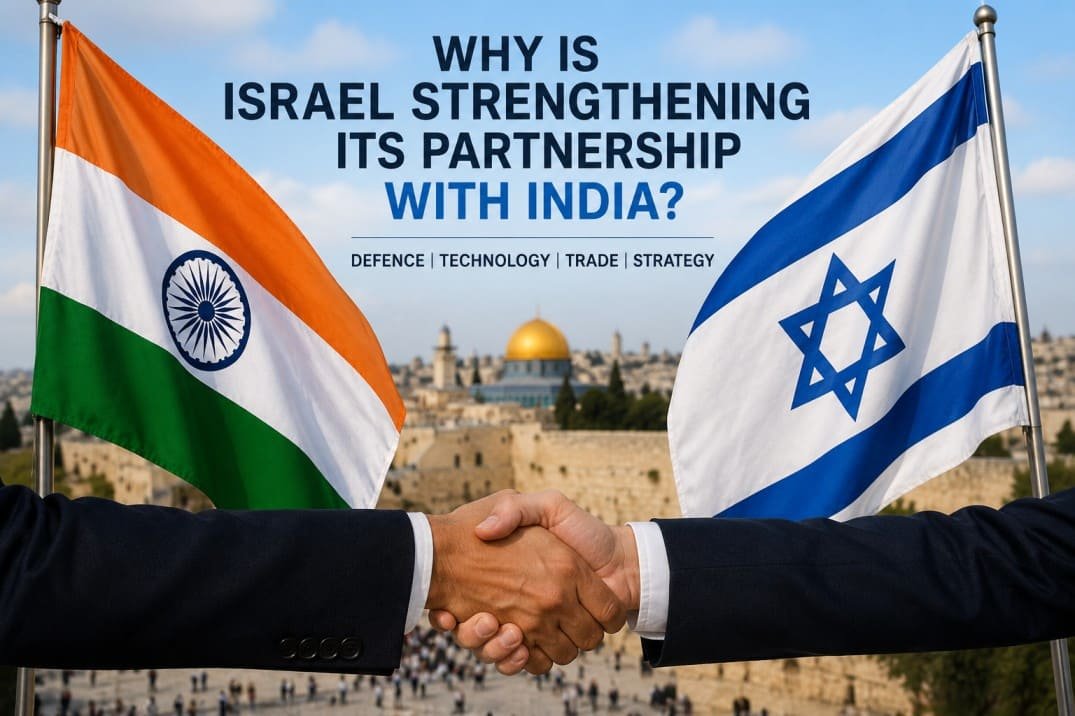
The strengthening partnership between Israel and India reflects far more than a traditional diplomatic relationship. It is a strategic alliance built on shared security concerns, growing economic opportunities, technological innovation, and a mutual commitment to addressing emerging global challenges. From defense cooperation and cybersecurity to agriculture, water management, and high-tech innovation, both nations continue to expand collaboration across multiple sectors.
As global power dynamics evolve and geopolitical uncertainties reshape international relations, India and Israel are expected to deepen their engagement through new trade initiatives, joint research, defense projects, and investment opportunities. While regional developments and changing diplomatic priorities will continue to influence the pace of cooperation, the relationship has demonstrated resilience and adaptability over the years.
Looking ahead, the India–Israel partnership is likely to remain a significant pillar of both countries’ foreign policy strategies, with its impact extending beyond bilateral ties to influence security, technology, and economic cooperation across the broader Indo-Pacific and Middle East regions..
Leave a Reply