
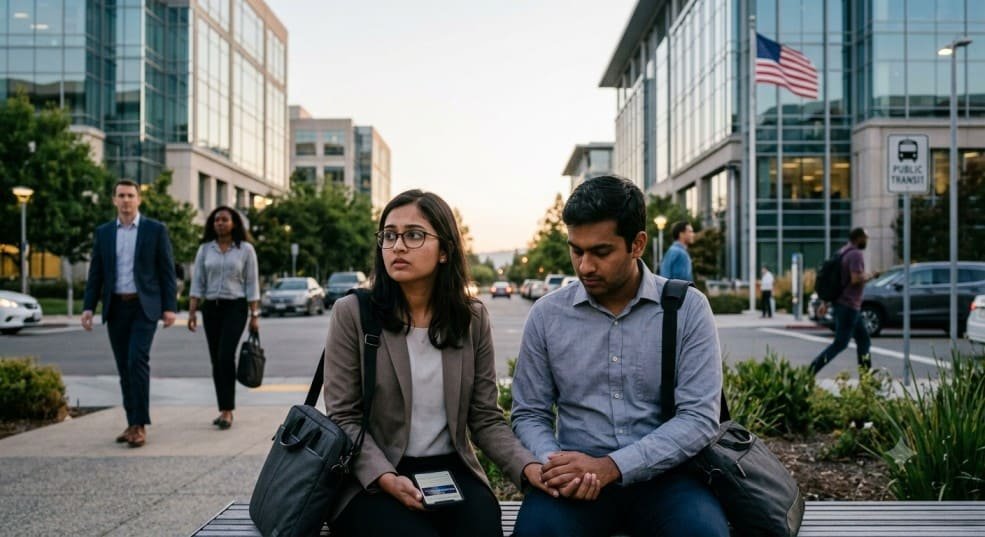
The debate surrounding economic nationalism and high-skilled immigration has reached a boiling point. In a fiery address in Milwaukee, Wisconsin, U.S. Vice President JD Vance unveiled a sweeping federal crackdown on the systemic abuse within employment-based immigration systems. Emphasizing an uncompromising stance on domestic economic protection,
Vance declared that American jobs must go to American workers rather than foreign fraudsters. This announcement marks a dramatic escalation in the administration’s efforts to overhaul guest worker programs, sending shockwaves through the global technology sector and corporate America alike.
The federal initiative operates under the newly formed Task Force to Eliminate Fraud, an aggressive interagency unit personally spearheaded by the Vice President.
According to administration officials, the federal Department of Labor has already deployed dozens of subpoenas and formal investigations targeting labor brokers, international corporations, and outsourcing networks. By leveraging the full investigative weight of the executive branch, the administration seeks to dismantle what it describes as widespread illicit schemes designed to manipulate the immigration lottery, suppress middle-class wages, and systematically bypass qualified domestic job seekers.
Inside the Department of Labor Cracking Down on H-1B Visa Fraud and Illegal Exploitation
At the very heart of this domestic labor enforcement push lies the H-1B visa program, a non-immigrant work authorization framework originally designed by the U.S. Congress to fill critical talent shortages in highly specialized fields like medicine, advanced science, and technology engineering. Over the years, however, critics argue the system has drifted far from its foundational purpose. Instead of sourcing uniquely brilliant global innovators, the administration alleges that massive outsourcing entities and bad actors have effectively monopolized the annual visa allocation to procure lower-cost contract labor.
The Office of the Inspector General within the Department of Labor recently uncovered a matrix of fraudulent activities that undermine the integrity of American labor laws. Federal investigators report that numerous entities have engaged in coordinated multiple-filing schemes, where shell corporations submit dozens of duplicate applications for a single foreign worker to artificially maximize their odds in the annual computerized lottery.
“We are going to take aggressive action, which we believe is probably the most aggressive action against foreign labour fraud by an Inspector General, this administration,” he said.
Furthermore, federal probes have illuminated highly coercive wage-kickback schemes, where foreign workers are quietly forced to return a percentage of their salaries to corporate handlers, allowing businesses to operate well below local prevailing market wages while squeezing out domestic applicants.
How Corporate Arbitrage and Foreign Fraudsters Undercut the Prevailing Wages of Everyday Americans
The economic consequences of unchecked visa manipulation extend far beyond corporate boardrooms, directly eroding the financial stability of the domestic tech and engineering workforce. Under statutory regulations, U.S. employers are legally required to certify that hiring foreign guest workers will not adversely impact the wages or working conditions of similarly situated domestic employees. Yet, through elaborate corporate arbitrage structures, bad actors have routinely bypassed these protections to cultivate a compliant, underpaid shadow workforce.
Understand the broader geopolitical issues influencing U.S. foreign policy.
When massive enterprises fill entry-level and mid-tier tech roles exclusively with lower-paid contractual visa holders, it creates an artificial ceiling on industry wages.
American graduates from top-tier university programs find themselves competing against artificially deflated labor costs, leading to widespread underemployment in fields that should otherwise be booming. By launching this comprehensive enforcement net, the federal task force intends to force corporations to reassess their hiring pipelines, restoring natural wage growth and ensuring that domestic tech professionals receive fair market compensation without facing structurally rigged competition.
Read our analysis of India’s growing role in global diplomacy and strategic partnerships.
The Broad Reach of the Anti-Fraud Task Force from Subpoenas to Corporate Accountability
The current federal crackdown is distinct from historical immigration debates due to its heavy reliance on aggressive corporate accountability and white-collar criminal enforcement. Rather than merely adjusting annual immigration caps or altering paperwork requirements, the Task Force to Eliminate Fraud is pursuing bad actors with intense legal pressure. Labor Department Inspector General Anthony D’Esposito publically confirmed that the federal government is actively chasing down every available whistleblower lead, signaling that even the most prominent multinational corporations are no longer immune to federal oversight.
A primary example of this heightened scrutiny is the public focus on global technology service providers, including prominent firms like Cognizant, which have recently appeared in federal whistleblower chatter regarding potential irregularities in both H-1B and Permanent Employment Certification (PERM) processes. While federal officials emphasize that no formal charges of wrongdoing have been filed against specific major tech firms at this stage, the issuance of sweeping federal subpoenas underscores a monumental shift. The administration is making it clear that any business utilizing guest worker programs must maintain flawless, verifiable compliance infrastructure or face severe civil and criminal penalties.
Explore more international developments shaping global policy and economies.
Global Repercussions for Outsourcing Models and International Tech Sectors
Because the H-1B visa ecosystem is deeply intertwined with international tech economies, this domestic policy shift is generating immense anxiety across global technology hubs. Statistically, professionals from India receive more than seventy percent of all approved H-1B visas annually, largely concentrated within the information technology, software engineering, and financial services landscape.
Indians have suffered to great extent. In recent interview with the media indians claim to have On the Shattered “American Dream”, and they are Living in Constant Instability:
“In the last 11 years, I have never felt like going back to India. But this sort of instability triggers people to make those life changes. And now we are here, wondering if one should return to India? The way this has been done by the U.S. government shows that they do not care for people at all. These types of decisions are like brain wave strikes, and then it is just executed.” — Ansh, an Indian H-1B visa holder
“Ever since I was a teenager, my dream has been to go to the United States—the promised land. I thought an MBA was my last shot… But with the latest $100,000 move on H-1B visas, I’m worried about what the future holds for me. It is stressful because [the administration] shoots from the hip. There are so many drastic changes, so many uncertainties.” — Piyush, a 26-year-old MBA aspirant from Bengaluru
Consequently, an uncompromising, hyper-vigilant federal enforcement strategy in Washington will inevitably disrupt traditional offshore-onshore corporate outsourcing pipelines.
For decades, many international tech conglomerates built their entire business models around the fluid movement of human capital into the United States. Tightened scrutiny, extensive background checks, and structural changes to wage-floor requirements mean that the historical reliance on cheap contract immigration is becoming economically unviable. Industry analysts suggest that international firms must rapidly pivot toward domestic talent acquisition within the United States or significantly enhance their human resource compliance systems to survive the administration’s rigorous audit standards.
Restoring the True Intent of Skilled Worker Immigration to Attract Real Global Geniuses
The administration’s aggressive rhetoric against visa abuse does not signal a complete closure of American borders to international talent, but rather a profound philosophical realignment. In his public addresses, Vice President Vance explicitly separated fraudulent corporate exploitation from the legitimate recruitment of world-class innovators. The administration emphasizes that the original legislative framework was explicitly crafted to welcome exceptional scientists, elite medical doctors, and highly specialized technology pioneers whose unique capabilities directly advance national capabilities.
By filtering out corporate schemes that clog the immigration system with routine data entry and basic programming staff, the federal government aims to clear the path for genuine global geniuses. When the annual statutory cap of eighty-five thousand visas is no longer overwhelmed by systemic multi-filing fraud, truly exceptional international minds will find it far easier to secure lawful entry. This approach aligns directly with an economy focused on high-value innovation, prioritizing groundbreaking research and high-level development over simple labor cost reduction.
The Path Forward for Human Resources and Legal Sponsoring Compliance
As the Department of Labor intensifies its oversight, American enterprises must quickly adapt to a challenging legal landscape. The era of treating guest worker visas as a routine, low-risk human resource mechanism is officially over. Sponsoring employers must prepare for the high probability of random federal desk audits, extensive site visits, and comprehensive reviews of their prevailing wage documentation to ensure total transparency.
To successfully navigate this era of heightened domestic labor enforcement, businesses should immediately conduct independent internal reviews of their entire immigration portfolios. Corporate compliance departments must ensure that job descriptions perfectly match the actual daily responsibilities of visa holders, that compensation accurately aligns with local labor market realities, and that third-party staffing agencies operate with complete legal integrity. Taking a proactive stance on compliance is the only way for forward-thinking companies to insulate themselves from disruptive federal investigations and potential public litigation.
Prioritizing the American Worker as the Core Foundation of Economic National Strength
At its absolute core, the H-1B and PERM visa investigation reflects a deeper political commitment to an America First economic philosophy. The administration operates under the foundational premise that a nation’s primary economic obligation is to ensure the prosperity, safety, and upward mobility of its own citizens. By intentionally confronting entrenched corporate interests and international outsourcing networks, federal policy is shifting away from globalization models that prioritize cheap corporate labor above all else.
This comprehensive visa enforcement push serves as a clear signal to corporate America that the exploitation of guest worker programs to bypass qualified domestic labor will face severe legal consequences. As the Task Force to Eliminate Fraud continues to issue subpoenas and gather whistleblower testimonies, the administration is actively redefining the rules of the domestic labor market. By ensuring that American jobs remain firmly protected for American workers, the federal government seeks to build a more resilient, high-wage domestic economy that rewards local talent and fosters genuine innovation across the natio


Leave a Reply