
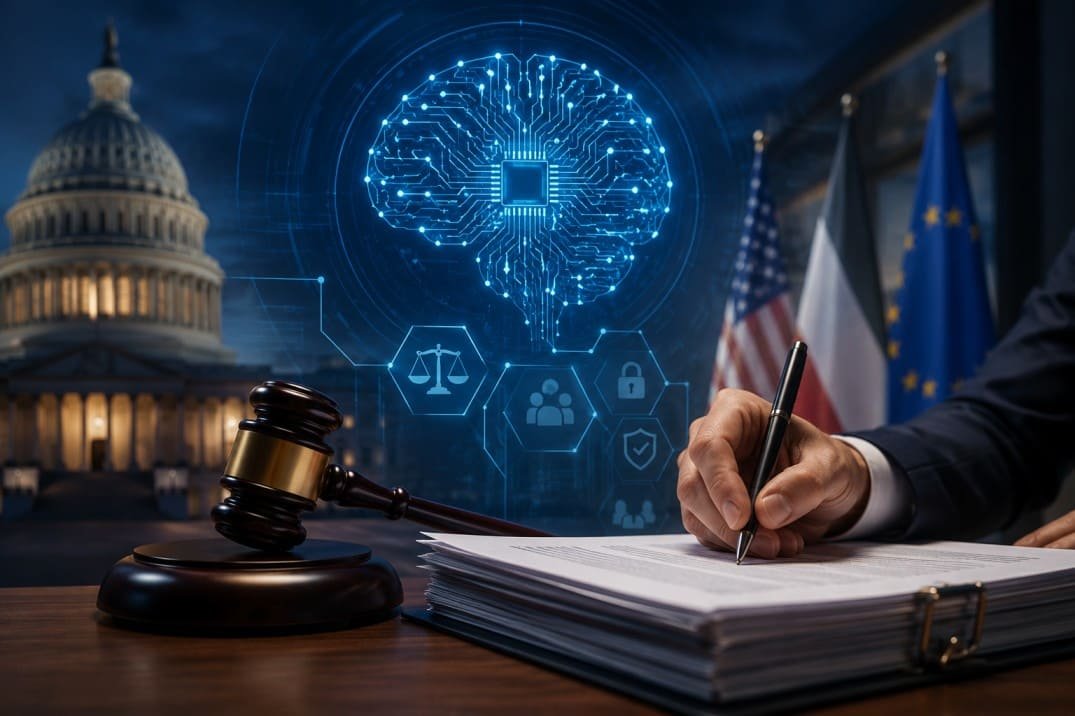
As intelligent systems quietly transform global industries, policymakers worldwide have reached a critical crossroads in technological oversight. The early era of self regulation and voluntary guidelines has given way to binding statutory rules as governments move to protect public interests.
Synthetic media, automated decision tools, and powerful foundation models now permeate daily life, making legal boundaries an urgent requirement rather than an optional future concept. Society is witnessing a historic realignment where innovation must align with public accountability. The global push toward strict AI regulation in 2026 reflects a fundamental decision to shape how technology interacts with democratic rights, economic stability, and human safety.Since the entire world has been using AI hemce it becomes a crucial part for our government to foster the trust of our government to makes strict laws for AI regulations.
Global Expansion of AI Regulation in 2026
The widespread expansion of AI regulation in 2026 represents a coordinated shift toward statutory enforcement across major global economies. At the center of this legislative transformation is the European Union AI Act, which reaches key enforcement deadlines in 2026. Under these landmark rules, strict obligations apply to high risk automated systems, accompanied by mandatory watermarking for synthetic media and mandatory disclaimers for generative content .One must know How the global AI infrastructure race is shaping technological sovereignty
Non compliance under European law carries substantial financial penalties reaching up to fifteen million euros or three percent of global annual turnover. Simultaneously, individual American states and Asian nations like South Korea have established comprehensive governance frameworks to supervise automated models. These legal structures introduce mandatory risk assessments, systematic audits, and strict transparency requirements for developers and deployers alike.
Why is Governments Are Increasing AI Regulation in 2026
Governments are accelerating the rollout of AI regulation in 2026 due to escalating concerns over public safety, systemic bias, and national security. The proliferation of hyper realistic deepfakes and automated misinforming content has created unprecedented threats to electoral integrity and individual privacy. Additionally, unmonitored algorithmic models have repeatedly demonstrated potential for discriminatory outcomes in sensitive sectors such as employment, housing, credit access, and medical care.
Beyond social risks, national security authorities view frontier foundation models as critical dual use assets capable of facilitating cyber warfare or biological risks if left unchecked. By instituting comprehensive AI regulation in 2026, nations aim to prevent algorithmic discrimination, safeguard personal data rights, protect creative copyright, and establish clear operational liabilities for technology providers.Top AI Innovations to Watch in August 2026
What Is the Impact of Increasing AI Regulation in 2026?
The escalating enforcement of AI regulation in 2026 is fundamentally reshaping the operational strategies of technology firms and enterprise deployers worldwide. Companies are now forced to allocate substantial capital toward compliance architecture, continuous model audits, data lineage verification, and third party risk assessments. For enterprise developers, these legal frameworks raise entry barriers, favoring established corporations capable of managing complex legal mandates while forcing smaller startups to navigate demanding risk tiers. As governments increasingly use digital platforms and technology to communicate with citizens, questions about public spending on traditional media have also grown. Why Modi Govt Spent ₹910 Crore on Ads examines the scale of government print advertising expenditure and whether such spending delivers sufficient public value
However, the broader societal impact is overwhelmingly positive for consumer confidence. Clear statutory standards foster greater public trust, minimize harmful algorithmic errors, and provide consumers with enforceable rights against non transparent decisions. Ultimately, these regulatory frameworks transform artificial Navigating AI Regulation in 2026 and Beyond.How AI adoption is expanding beyond large companies to developers and individual users.
Navigating the Shift : Are Increasing AI Regulation in 2026
As intelligent systems rapidly reshape global industries, policymakers worldwide have reached a critical turning point in technology governance, marking a definitive shift from voluntary guidelines to binding statutory oversight.
The expansion of AI regulation in 2026 represents a coordinated global movement toward enforceable legal standards, spearheaded by landmark enforcement milestones under the European Union AI Act alongside new national legislation across Asian economies and American state frameworks. Governments are accelerating this oversight to mitigate severe social risks, including malicious deepfakes, algorithmic discrimination in hiring, data privacy breaches, national security vulnerabilities, and copyright infringement. Major commercial developers and deployers including tech leaders such as OpenAI, Google, Anthropic, Microsoft, and Meta now face mandatory risk classifications, systemic transparency audits, and penalties reaching up to seven percent of global annual turnover for non-compliance. While these strict compliance obligations increase operational costs for enterprise developers, the broader impact of AI regulation in 2026 establishes necessary consumer safeguards, protects individual fundamental rights, and builds long-term public trust in automated decision tools.
Ultimately, organizations that swiftly align their architectures with AI regulation in 2026 will secure a distinct competitive advantage while fostering ethical, resilient technological progress for years to come.
As the global economy enters this heavily monitored decade, the dynamic between rapid commercial innovation and constitutional protection continues to mature. Navigating the legal landscape established by AI regulation in 2026 requires technology creators to embed compliance directly into their technical architectures. Organizations that prioritize ethical oversight, data provenance, and transparency will not only avoid costly administrative fines but will also secure long term trust in an increasingly competitive marketplace. Through strong legal guardrails, society can harness the profound capabilities of artificial intelligence while preserving fundamental rights for future generations. As governments tighten regulations on technology and global supply chains, companies are also diversifying their manufacturing bases. This trend is evident in The Strategic Apple iPhone Production Shift to India from China, which explores how geopolitical and economic factors are reshaping Apple’s production strategy.
Leave a Reply