
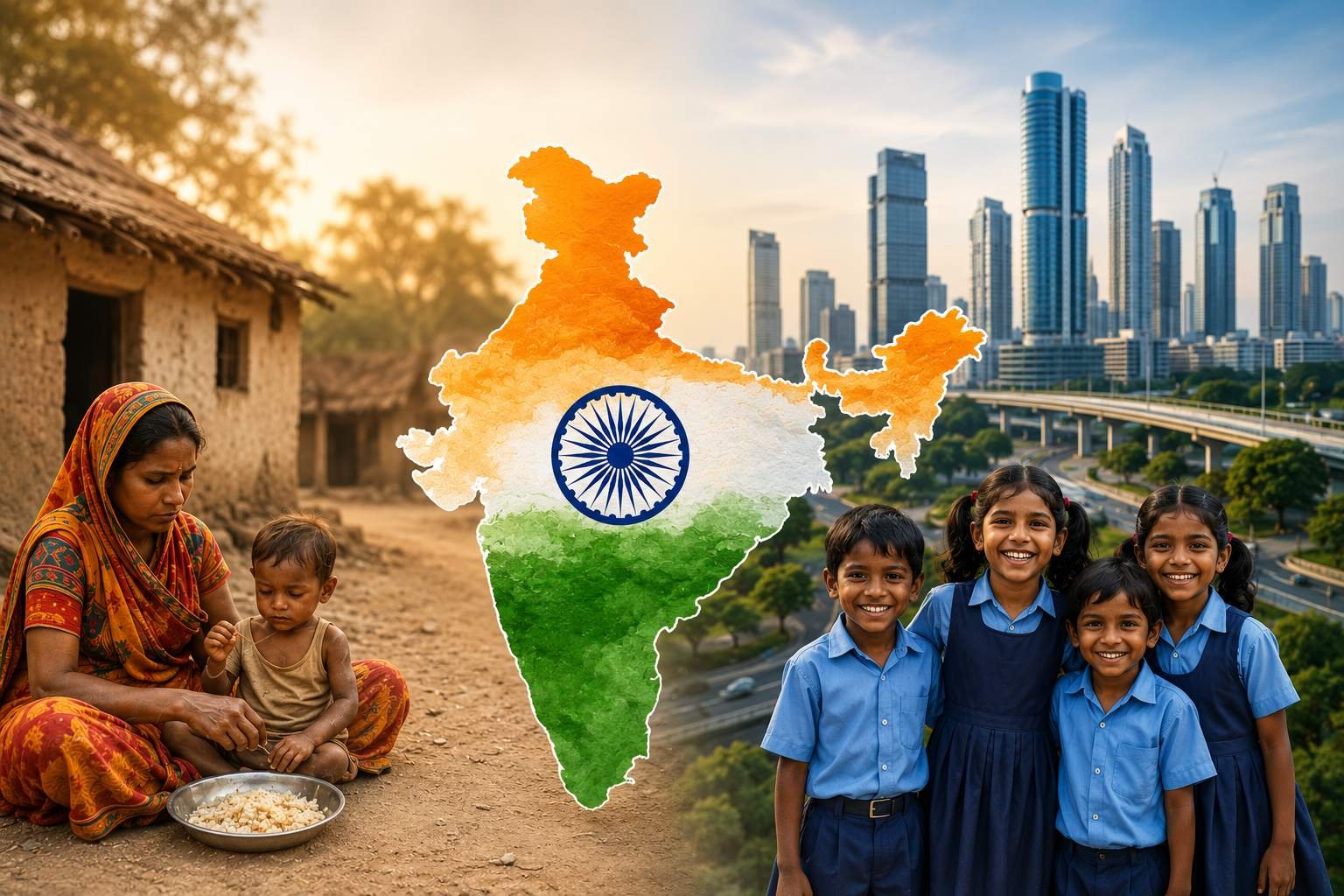
India has made remarkable progress in economic growth, technology, infrastructure, and digital transformation over the past few decades. Despite these achievements, malnutrition and poverty distribution in India remain among the country’s biggest developmental challenges. Millions of people continue to face inadequate nutrition, limited access to healthcare, poor sanitation, and insufficient income, particularly in rural and economically disadvantaged regions.
Malnutrition and poverty are deeply interconnected. Poverty limits access to nutritious food, healthcare, clean drinking water, and education, while malnutrition reduces productivity, learning outcomes, and long-term earning potential. Breaking this cycle is essential for India’s inclusive growth and achievement of the Sustainable Development Goals (SDGs).
This article explores the causes, current trends, regional disparities, government initiatives, and possible solutions to address malnutrition and poverty in India.
Understanding Malnutrition in India
Malnutrition refers to deficiencies, excesses, or imbalances in a person’s intake of energy and nutrients. In India, undernutrition remains the most significant concern, especially among children and women.
The major forms of malnutrition include:
Stunting
Stunting occurs when children fail to achieve their expected height for their age due to long-term nutritional deficiencies.
Wasting
Wasting reflects acute malnutrition and occurs when a child’s weight is significantly lower than expected for their height.
Underweight
Children who weigh less than the recommended standard for their age are classified as underweight.
Anaemia
Iron deficiency remains widespread among women and children, affecting health, immunity, and cognitive development.
According to the National Family Health Survey (NFHS-5), child malnutrition continues to be a major public health concern despite improvements in healthcare and nutrition programs.
For official nutrition statistics, visit the Ministry of Health and Family Welfare:
Understanding Poverty Distribution in India
Poverty is not evenly distributed across India. While several states have experienced rapid economic development, others continue to struggle with lower incomes, limited infrastructure, and fewer employment opportunities.
Poverty is generally classified into:
Rural Poverty
Most rural households depend on agriculture and informal employment. Limited irrigation, seasonal work, low agricultural productivity, and climate-related risks often contribute to persistent poverty.
Urban Poverty
Urban areas offer better employment opportunities but also face challenges such as rising living costs, informal settlements, unemployment, and unequal access to quality healthcare and education.
According to the World Bank, economic growth has significantly reduced extreme poverty, but income inequality and regional disparities remain major concerns.
How Poverty and Malnutrition Are Connected
The relationship between poverty and malnutrition is cyclical.
Families with limited incomes often struggle to purchase nutritious food. Poor nutrition weakens immunity, increases disease risk, and reduces children’s educational performance.
Adults affected by malnutrition may experience reduced productivity and lower earning capacity, making it difficult to escape poverty.
This cycle continues across generations unless interventions improve nutrition, healthcare, education, and employment opportunities simultaneously.
Regional Distribution of Malnutrition and Poverty in India
The distribution of malnutrition and poverty varies considerably across states.
States with Higher Poverty Levels
Several states continue to experience relatively higher poverty rates due to historical, geographical, and economic factors.
These include:
- Bihar
- Jharkhand
- Odisha
- Uttar Pradesh
- Madhya Pradesh
Better Performing States
States such as Kerala, Tamil Nadu, Himachal Pradesh, and Goa have generally performed better on health and education indicators, contributing to improved nutritional outcomes.
The NITI Aayog regularly publishes multidimensional poverty reports that provide valuable insights into regional disparities.
Major Causes of Malnutrition and Poverty Distribution in India
Low Household Income
Insufficient income limits access to balanced diets, healthcare, education, and sanitation.
Unemployment and Informal Employment
A large proportion of India’s workforce depends on informal jobs without stable incomes or social security.
Poor Healthcare Access
Many rural communities continue to face shortages of hospitals, doctors, and maternal healthcare services.
Lack of Nutrition Awareness
Families may not always have sufficient knowledge about balanced diets, child feeding practices, or maternal nutrition.
Inadequate Sanitation
Poor sanitation contributes to repeated infections that reduce nutrient absorption, especially among children.
The UNICEF India website offers extensive information on child nutrition and sanitation: https://www.unicef.org/india
Government Initiatives to Reduce Malnutrition and Poverty
India has launched several flagship programs aimed at improving nutrition and reducing poverty.
POSHAN Abhiyaan
The POSHAN Abhiyaan focuses on improving nutritional outcomes among children, pregnant women, and lactating mothers through coordinated interventions.
Public Distribution System (PDS)
The PDS supplies subsidized food grains to eligible households under the National Food Security framework.
Mid-Day Meal Scheme
Nutritious school meals encourage attendance while improving child nutrition.
MGNREGA
The Mahatma Gandhi National Rural Employment Guarantee Act provides wage employment to rural households while supporting local infrastructure.
National Food Security Act
The Act aims to ensure affordable food grains for eligible citizens.
The Role of Education in Reducing Poverty
Education remains one of the strongest tools for breaking the poverty cycle.
Quality education improves:
- Employment opportunities
- Financial literacy
- Health awareness
- Women’s empowerment
- Nutrition knowledge
Higher education levels are closely associated with improved household income and better health outcomes.
Healthcare and Nutrition Must Work Together
Healthcare and nutrition cannot be addressed separately.
Strong healthcare systems improve:
Maternal Health
Healthy mothers are more likely to give birth to healthier children.
Immunization
Vaccination reduces childhood illnesses that contribute to malnutrition.
Growth Monitoring
Regular monitoring helps identify nutritional deficiencies early.
Community Health Workers
ASHA workers and Anganwadi centres play a crucial role in delivering healthcare and nutrition services across rural India.
Agriculture and Food Security
Agriculture plays a central role in addressing hunger.
Improving food security requires:
- Higher agricultural productivity
- Climate-resilient farming
- Better irrigation
- Reduced food wastage
- Improved supply chains
The Food and Agriculture Organization (FAO) provides global research on food security:
Technology Can Help Fight Poverty and Malnutrition
Digital technologies are improving welfare delivery across India.
Examples include:
Digital Payments
Direct Benefit Transfer (DBT) reduces leakages in welfare schemes.
Aadhaar Integration
Identity verification improves subsidy distribution.
Nutrition Tracking
Digital monitoring systems help identify children requiring nutritional support.
Data-Driven Governance
Governments can use data analytics to improve resource allocation and policy implementation.
Challenges That Still Need Attention
Despite considerable progress, India continues to face multiple challenges.
These include:
- Population growth
- Climate change
- Food inflation
- Regional inequality
- Urban migration
- Child anaemia
- Low dietary diversity
- Healthcare shortages
Addressing these issues requires coordinated action across governments, civil society, businesses, and local communities.
Sustainable Solutions for the Future
Long-term improvements require integrated strategies.
Strengthen Nutrition Programs
Expand community nutrition services and improve food diversity.
Increase Rural Employment
Creating sustainable livelihoods reduces poverty and improves food security.
Improve Women’s Education
Educated women contribute significantly to better family nutrition and child health.
Invest in Healthcare
Primary healthcare infrastructure should be strengthened, especially in underserved regions.
Promote Financial Inclusion
Access to banking, insurance, and credit empowers vulnerable households.
Why Addressing Malnutrition and Poverty Matters
Reducing malnutrition and poverty is essential not only for social welfare but also for India’s economic future.
A healthier and better-nourished population contributes to:
- Higher productivity
- Better educational outcomes
- Lower healthcare costs
- Increased workforce participation
- Faster economic growth
- Improved quality of life
Investing in human capital strengthens India’s competitiveness and supports sustainable development.
Conclusion
Malnutrition and poverty distribution in India remain closely linked challenges that affect millions of lives. While India has achieved significant progress in reducing extreme poverty and expanding welfare programs, regional disparities and nutritional deficiencies continue to require focused attention.
Government initiatives such as POSHAN Abhiyaan, the Public Distribution System, MGNREGA, and the National Food Security Act have contributed to improving food access and social protection. However, lasting progress depends on stronger healthcare systems, quality education, women’s empowerment, sustainable agriculture, and inclusive economic growth.
By combining effective public policies with community participation and technological innovation, India can reduce poverty, improve nutrition, and create healthier, more prosperous communities. Addressing these challenges today will help ensure that future generations have the opportunity to thrive and contribute to the nation’s continued development.
Malnutrition and poverty are closely linked to environmental conditions. Prabh News covers how poor air quality can worsen health outcomes, especially for children and vulnerable communities describing a place called Burnihart
Economic growth and effective policy reforms are essential to reducing poverty and improving nutrition. Explore how development strategies could shape India’s future
Regional development and better urban infrastructure can help reduce poverty while improving access to healthcare, education, and nutritious food. Read more here on best developing cities

Leave a Reply