
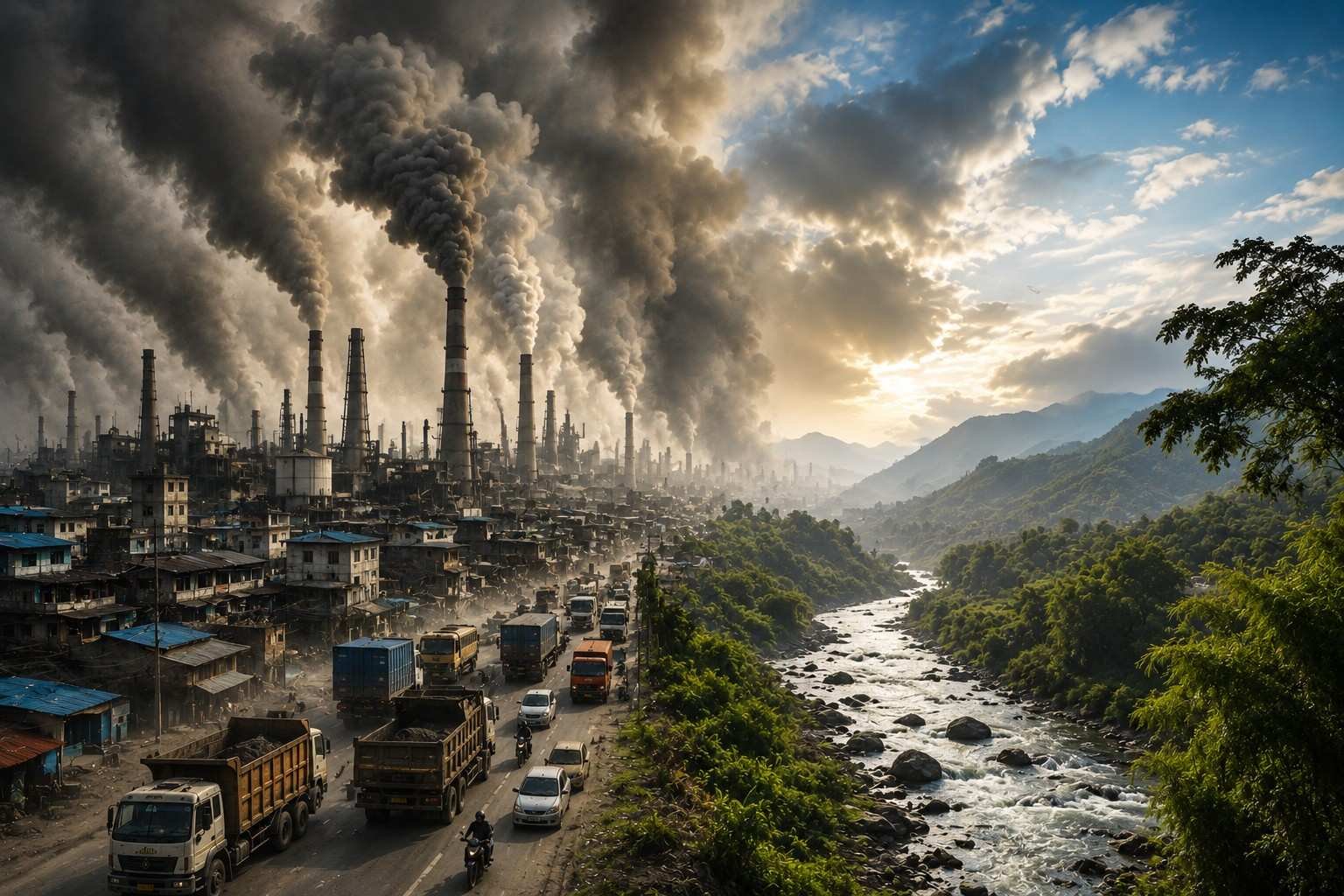
For years, Delhi has dominated headlines as India’s most polluted city. However, recent global air quality reports have revealed a surprising shift, India’s most polluted city isn’t Delhi. It’s Burnihat. This industrial town located on the border of Assam and Meghalaya has recorded extremely high levels of particulate matter, raising serious concerns about environmental sustainability and public health.
Burnihat’s rise in pollution rankings highlights an important reality: air pollution is no longer limited to India’s largest metropolitan areas. Industrial expansion, increasing vehicle emissions, dust pollution, and geographic conditions have transformed smaller towns into pollution hotspots.
Understanding why Burnihat has overtaken Delhi offers valuable lessons about environmental management, industrial regulation, and sustainable development across India.
Where Is Burnihat?
Burnihat is an industrial town situated along the Assam–Meghalaya border. It has become an important manufacturing hub due to its strategic location and growing industrial base.
The town houses several industries, including:
Cement Manufacturing
Numerous cement plants contribute to economic development but also generate significant dust and particulate emissions.
Steel and Metal Processing
Industrial activities release pollutants that can affect surrounding communities if not effectively controlled.
Chemical Industries
Chemical manufacturing and associated emissions also contribute to declining air quality.
Because Burnihat lies in a valley-like terrain, pollutants often remain trapped, especially during winter months when wind speeds are lower.
Why Burnihat Became India’s Most Polluted City
Several factors have contributed to Burnihat’s deteriorating air quality.
Industrial Emissions
One of the largest contributors is industrial activity. Manufacturing units emit particulate matter, sulfur dioxide, nitrogen oxides, and other pollutants.
Proper pollution-control technologies can significantly reduce these emissions, but strict monitoring remains essential.
Heavy Truck Traffic
Thousands of commercial vehicles transport raw materials and finished goods through Burnihat every day.
Diesel-powered trucks contribute to:
- PM2.5 pollution
- Nitrogen oxide emissions
- Carbon monoxide
- Road dust
Geographic Conditions Worsen Pollution
Geography plays a crucial role in Burnihat’s air quality.
Valley Effect
Pollutants become trapped because surrounding terrain limits air circulation.
Winter Temperature Inversion
During winter, cold air near the surface prevents pollutants from dispersing, causing pollution levels to rise dramatically.
These natural conditions make pollution control even more challenging.
Understanding PM2.5 Pollution
PM2.5 refers to tiny airborne particles measuring less than 2.5 micrometers in diameter.
Because these particles are extremely small, they can enter the lungs and bloodstream.
Exposure to PM2.5 has been associated with:
- Respiratory diseases
- Asthma
- Heart disease
- Stroke
- Reduced lung function
- Premature mortality
The World Health Organization (WHO) provides detailed guidance on air quality:
Burnihat vs Delhi: What’s Different?
Delhi remains one of the world’s most polluted capitals, but Burnihat has recently recorded higher annual average PM2.5 concentrations.
Delhi’s Pollution Sources
Delhi’s pollution primarily comes from:
- Vehicular emissions
- Construction dust
- Crop residue burning
- Industrial emissions
- Domestic fuel use
Burnihat’s Pollution Sources
Burnihat’s pollution is more concentrated around:
- Industrial activity
- Heavy transportation
- Dust emissions
- Geographic trapping of pollutants
Although the sources differ, both cities face serious environmental and public health challenges.
Health Impacts on Local Communities
Poor air quality affects every age group.
Children
Children are especially vulnerable because their lungs are still developing.
Older Adults
Older individuals face increased risks of cardiovascular and respiratory diseases.
Workers
Industrial workers and outdoor laborers experience prolonged exposure to harmful pollutants.
Reducing pollution can significantly improve life expectancy and overall quality of life.
Environmental Impact Beyond Human Health
Air pollution also affects ecosystems.
Agriculture
Pollutants can reduce crop productivity and damage vegetation.
Water Resources
Airborne pollutants eventually settle into rivers and lakes.
Biodiversity
Wildlife habitats can also be negatively affected by long-term pollution.
Government Measures to Improve Air Quality
Several agencies monitor pollution levels across India.
Central Pollution Control Board (CPCB)
The CPCB operates air quality monitoring stations and develops pollution-control standards.
National Clean Air Programme (NCAP)
The NCAP aims to reduce particulate pollution through coordinated action among central and state governments.
Continuous Air Quality Monitoring
Real-time monitoring enables authorities to identify pollution hotspots and implement targeted interventions.
What Industries Can Do
Industries have an important role in reducing emissions.
Install Better Filters
Modern filtration systems reduce particulate emissions.
Adopt Cleaner Fuels
Switching to cleaner energy sources lowers overall pollution.
Improve Dust Management
Water spraying and enclosed transport systems reduce airborne dust.
Environmental Compliance
Regular audits and strict enforcement encourage sustainable industrial practices.
What Citizens Can Do
Individuals can also contribute to cleaner air.
Reduce Vehicle Use
Carpooling and public transport reduce emissions.
Avoid Open Burning
Burning waste releases toxic pollutants.
Plant More Trees
Urban greenery helps improve local air quality.
Support Clean Energy
Using renewable energy reduces dependence on fossil fuels.
The Economic Cost of Air Pollution
Poor air quality has significant economic consequences.
It increases:
- Healthcare spending
- Lost productivity
- Absenteeism
- Environmental damage
- Infrastructure maintenance costs
Cleaner air benefits both public health and economic growth.
Technology Can Help Monitor Pollution
Modern technologies improve environmental management.
Satellite Monitoring
Satellites help identify pollution sources across large regions.
AI-Based Monitoring
Artificial intelligence can predict pollution trends and support policy decisions.
Smart Sensors
Low-cost air quality sensors improve local monitoring.
Why Burnihat’s Story Matters
Burnihat demonstrates that pollution is no longer just a metropolitan issue.
Rapid industrialization without adequate environmental safeguards can affect smaller towns just as severely as major cities.
Its experience highlights the need for:
- Stronger environmental regulations
- Sustainable industrial development
- Better urban planning
- Continuous air quality monitoring
- Greater public awareness
The Way Forward
Reducing pollution requires cooperation among governments, industries, scientists, and citizens.
Priority actions include:
Strengthening Environmental Regulations
Strict enforcement encourages industries to adopt cleaner technologies.
Expanding Green Infrastructure
More trees and green spaces improve urban environments.
Investing in Public Transport
Efficient transport systems reduce vehicle emissions.
Increasing Public Awareness
Educating communities encourages environmentally responsible behavior.
Conclusion
India’s most polluted city isn’t Delhi. It’s Burnihat. This surprising reality highlights how air pollution has become a nationwide challenge rather than an issue confined to large metropolitan areas. Industrial emissions, heavy transportation, dust pollution, and geographic conditions have combined to make Burnihat one of the country’s most affected locations.
Addressing this challenge requires stronger environmental regulations, cleaner industrial technologies, better monitoring systems, and active community participation. While Burnihat’s situation is concerning, it also presents an opportunity for policymakers and industries to adopt sustainable practices that protect both public health and economic development.
India’s journey toward cleaner air will depend on balancing industrial growth with environmental responsibility, ensuring that future generations inherit healthier cities and communities.
Leave a Reply