
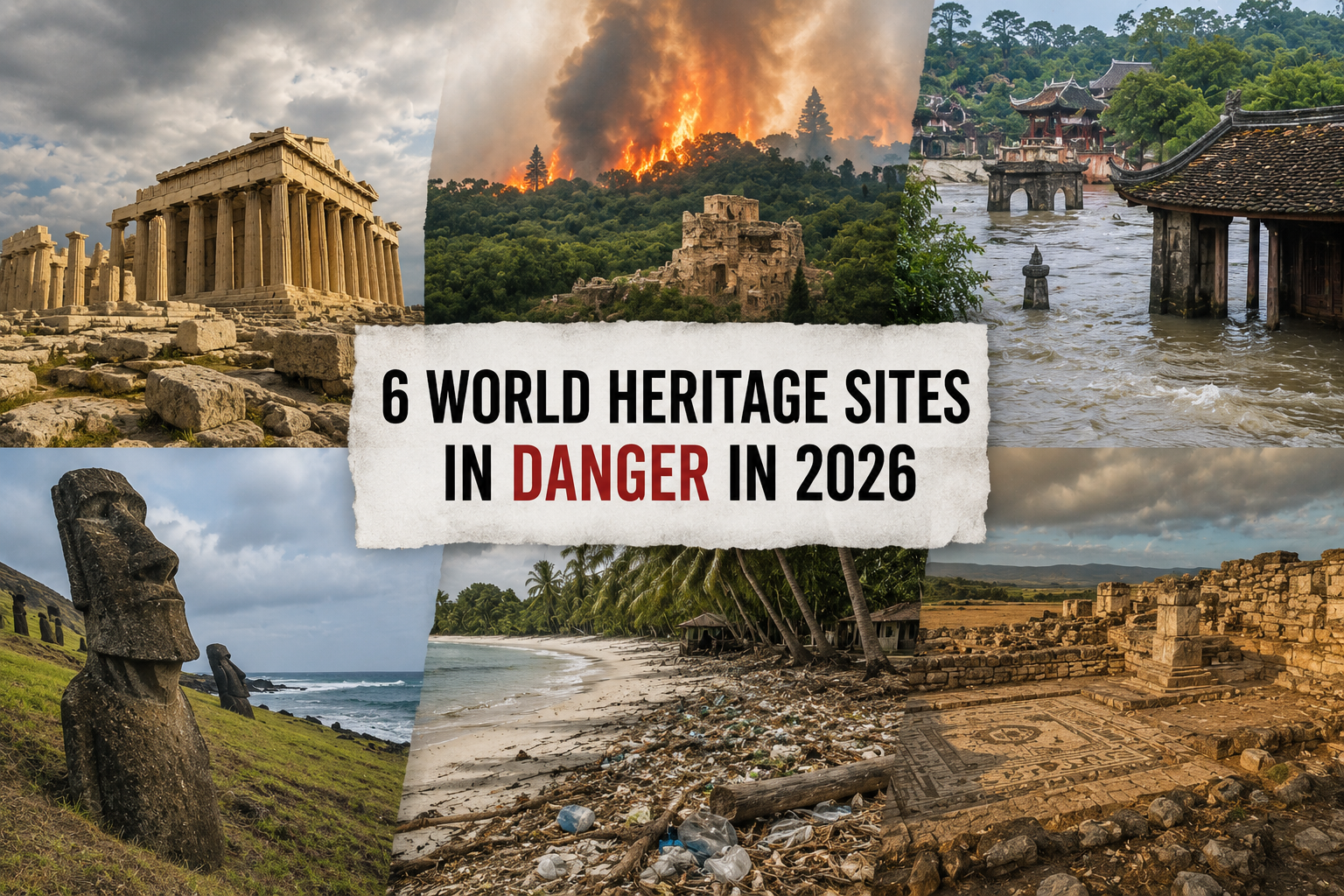
According to official updates from UNESCO, six extraordinary cultural and natural landmarks were added to the list of World Heritage Sites in Danger due to immediate threats.
Three of these sites were designated through an emergency procedure to accelerate international aid, while three previously listed sites were transferred to the danger list following severe condition declines.
- Boma,Badingilo Migratory Landscape in South Sudan: Home to the largest terrestrial mammal migration on Earth, this vast savanna ecosystem faces critical biodiversity disruption.
- Mount Amel Castles in Lebanon: A network of five historical fortresses documenting defensive architecture from the Crusades through the Ottoman era, heavily imperiled by regional conflict.
- Sebastia in the State of Palestine: An archaeological treasure containing historical layers from the 9th century BCE through Hellenistic, Roman, and Byzantine periods.
- Ancient City of Tauric Chersonese and its Chora in Ukraine: An ancient Black Sea site suffering physical deterioration and management challenges due to ongoing geopolitical instability.
- Historic Inner City of Paramaribo in Suriname: A unique colonial wooden city center where improper modern construction projects compromised its authentic urban landscape.
- Tyre in Lebanon: An ancient Phoenician metropolis featuring magnificent Roman ruins that currently face severe risks from nearby hostilities.
Although each site faces unique challenges, they all share one common reality: their outstanding cultural or natural value is under immediate threat. Armed conflict has severely affected historic sites in Lebanon, Ukraine, and the State of Palestine, damaging ancient monuments, disrupting conservation work, and limiting access for preservation experts. In South Sudan, the Boma–Badingilo Migratory Landscape is threatened by habitat degradation, poaching, infrastructure expansion, and the impacts of climate change, putting one of the world’s largest terrestrial mammal migrations at risk.
Many of these risks are linked to broader climate challenges discussed in Dubai and Global Warming: Can Innovation Beat Climate Change?.
Meanwhile, Paramaribo in Suriname has been affected by inappropriate urban development and modern construction that undermine the authenticity of its historic colonial architecture.
UNESCO placed these sites on the List of World Heritage in Danger to draw global attention to these urgent threats, mobilize international funding and technical assistance, and support long-term conservation efforts before irreversible damage occurs.
Why Were These World Heritage Sites Added to the Danger List?
Understanding why these landmark properties faced emergency status highlights the growing pressures on global conservation efforts. These are the major reasons as to why these heritage sites are termed as below
- Armed Conflict and Instability: In region after region, military operations and shelling cause direct structural damage to irreplaceable ancient castles and archaeological ruins.
- Climate Change and Habitat Loss: Shifting weather patterns, environmental degradation, and commercial poaching severely threaten vast ecosystems like South Sudan’s wildlife migration corridors.
- Inappropriate Urban Development: Unchecked modern construction, such as intrusive government buildings in Paramaribo or planned land division in Sebastia, threatens to erase the historical integrity of these settlements.
What Is the Impact of Placing World Heritage Sites in Danger?
UNESCO added these World Heritage Sites to the List of World Heritage in Danger because they face serious and immediate threats that could permanently damage their cultural, historical, or natural significance.
The reasons vary from site to site but include armed conflict, climate change, wildfires, flooding, uncontrolled urban development, illegal construction, pollution, deforestation, and inadequate conservation efforts. In some cases, natural disasters have weakened historic structures, while in others, human activities continue to put irreplaceable ecosystems and archaeological landmarks at risk.
Travelers planning to visit UNESCO landmarks should also read The Biggest Travel Trends Indians Should Know in 2026 and Passport Power: Budget International Getaways for Indian Travelers.
Being placed on the Danger List is not a penalty but a call for urgent international action. The designation helps mobilize technical expertise, financial assistance, and coordinated conservation efforts from UNESCO, member states, and global partners. It also raises public awareness, encouraging governments and local communities to implement stronger protection measures before irreversible damage occurs. Ultimately, the goal is to restore these sites, preserve their Outstanding Universal Value, and ensure they remain protected for future generations.
Protecting Our Shared Global Legacy
The addition of these six sites to UNESCO’s List of World Heritage in Danger serves as a reminder that protecting cultural landmarks and natural ecosystems requires urgent global cooperation.
From conflict and climate change to urban development and environmental degradation, the challenges facing these heritage sites are becoming increasingly complex.
By placing these locations on the danger list, UNESCO aims to mobilize international funding, technical expertise, and conservation efforts before irreversible damage occurs.
The designation is not simply a warning,it is an opportunity for governments, local communities, and global organizations to work together to preserve irreplaceable pieces of human history and biodiversity. The actions taken over the coming years will determine whether these extraordinary sites can be safeguarded for future generations or continue to face mounting threats.
Leave a Reply