
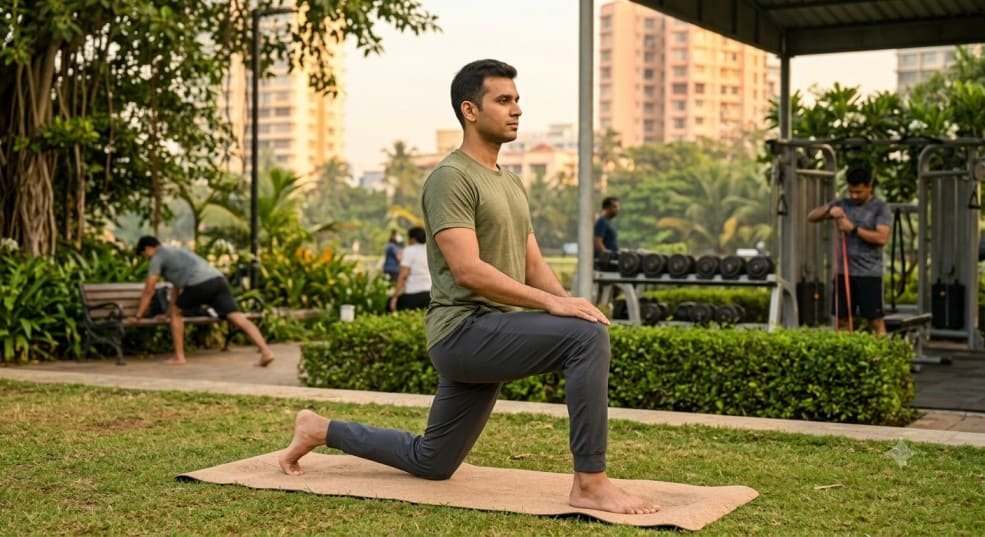
Driven by corporate burnout, chronic joint pain, and sedentary desk jobs, urban Indians are increasingly ditching heavy lifting vs mobility training dilemmas to adopt functional movement. This major cultural shift prioritizes pain-free daily movement, active posture correction, and long-term healthspan over short-term physical appearance and ego lifting.
The News Context: India’s Shift to Functional Longevity Fitness
A major transformation is taking place across gyms, boutique fitness studios, and corporate offices in top Indian metropolitan hubs like Bengaluru, Mumbai, and Delhi-NCR. For over a decade, Indian fitness trends were dominated by high-intensity bodybuilding, heavy deadlifts, and aggressive weight-loss challenges. However, recent health reports highlight a significant pivot: urban corporate workers are realizing that one hour of intense exercise cannot reverse nine hours of continuous desk sitting.
“Fitness in India is shifting from the ‘aesthetics era’ of six-pack abs to an era defined by functional longevity, active recovery, and mobility training,” notes recent coverage on urban movement trends.
In India,where postural strain, tight hip flexors, and joint pain from heavy lifting affect thousands of 30-plus corporate workers,enthusiasts are choosing controlled mobility routines, kettlebell work, and yoga vs heavy gym training alternatives to protect their joints.
Prabh news also covers on “Why Young Adults Are Having More Heart Attacks’” which commonly seen the youth of the country.
Actionable Breakdown: Heavy Lifting vs Mobility Training
The rise of longevity & mobility workouts reflects a practical response to modern desk-job demands. Instead of asking is heavy gym workout necessary?, fitness enthusiasts are focusing on the benefits of longevity fitness to build long-term healthspan.
| Feature | Heavy Gym Culture (Traditional) | Longevity & Mobility Workouts (Modern) |
| Primary Goal | Muscle hypertrophy, peak weight lifting, short-term aesthetics | Pain-free joints, functional range of motion, long healthspan |
| Joint & Spine Impact | High spinal compression; risk of heavy lifting joint injuries | Low impact, joint lubrication, and active tissue restoration |
| Recovery Needs | High central nervous system fatigue; longer downtime | Restoratives that actively reduce daily stress and cortisol |
| Desk-Worker Relief | Often aggravates tight hip flexors and rounded shoulders | Directly targets posture, spinal extensions, and neck strain |
How to Prevent Gym Joint Injuries with Active Recovery Workouts
Transitioning away from ego lifting doesn’t mean abandoning strength entirely,it means training smarter:
- Swap Ego-Lifting for Progressive Stimulus: Trade maximal 1-rep heavy lifts for kettlebell mobility workouts, bodyweight controls, or animal flow training in India.
- Integrate Daily “Movement Snacks”: Instead of staying static all day, take 3-minute mobility breaks every hour to perform thoracic rotations and dynamic hip openers. Check out our internal guide on desk worker stretching techniques to keep your spine aligned throughout the workday.
- Focus on Joint Mechanics: Learn how to fix desk posture back pain by performing daily dynamic sequences like cat-cow stretches and 90/90 hip switches.
- Track Recovery, Not Just Calories: Utilize smart rings or fitness bands to track Heart Rate Variability (HRV). Adjust your daily workout intensity based on bodily readiness rather than pushing through high-intensity sessions when fatigued. Sedentary lifestyles and desk-based jobs are making flexibility and movement more important than ever. This shift is also influenced by workplace changes discussed in AI Jobs at Risk: Top 20 Careers Facing AI Disruption
Top Fitness Trends Dominating India in 2026
Fitness trends in 2026 are shifting beyond traditional bodybuilding and heavy lifting toward movement quality and long-term health. Across India, workouts such as Hyrox, Pilates, functional fitness, recovery workouts, mobility classes, and movement training are gaining popularity among people of all ages.
New Trends emerging in the market
Rather than focusing only on lifting heavier weights, fitness enthusiasts are prioritizing joint mobility, flexibility, balance, endurance, and injury prevention. Hyrox has attracted runners and strength athletes looking for a complete fitness challenge, while Pilates and mobility classes have become popular for improving posture and core strength. Functional fitness and movement training are also being embraced because they enhance everyday performance, whether it’s climbing stairs, carrying groceries, or playing sports.
As awareness of sustainable fitness grows in 2026, experts increasingly recommend combining heavy lifting with mobility and recovery workouts to build strength while maintaining long-term physical health and reducing the risk of injuries.
FAQ Block
Why are longevity & mobility workouts replacing heavy gym culture in India?
Urban Indians are facing high rates of posture strain, chronic back pain, and workplace burnout from long hours at desk jobs. Mobility and longevity training focus on reversing sitting-induced damage, preserving joint health, and building sustainable lifetime strength rather than chasing superficial aesthetics.
Sustainable fitness also depends on access to clean environments and healthy living conditions.
Related reading: India’s Water Crisis: Cities That Could Run Out of Water.
What is mobility training, and how does it differ from flexibility?
Flexibility is the passive ability of a muscle to stretch, whereas mobility is the active strength and control you have across a joint’s full range of motion. Mobility training builds functional strength that protects joints during daily activities.
Can mobility routines help fix desk posture and back pain?
Yes. Mobility routines specifically target key areas affected by prolonged sitting, such as tight hip flexors, rounded upper backs, weak core muscles, and neck strain. Regular mobility exercises help realign the spine and open the chest, improving posture within weeks. While the climate in india is uncertain Outdoor workouts may not be possible during severe weather, making indoor mobility sessions a good option.
Is heavy gym workout necessary for 30 plus corporate workers?
Heavy lifting is not strictly necessary for general health. While resistance training is essential for bone density and muscle preservation, combining lighter strength work with active recovery workouts and functional movement offers better joint safety and longevity for desk-bound professionals.
Better fitness infrastructure is becoming a feature of India’s rapidly developing metropolitan areas. Read more in Prosperous Cities of India That Will Have Amazing Ease of Living.
This article is based on current fitness research, sports medicine guidance, and expert recommendations on mobility and resistance training.
Leave a Reply