
Tech Giant Horizon: Analyzing the Full Scope of Meta’s Massive Infrastructure Expansion Into Western Canada
The global race for artificial intelligence supremacy requires more than complex software algorithms and elite engineering talent. It demands an unprecedented amount of raw physical infrastructure, computational horsepower, and strategic geographical positioning. Tech giant Meta has officially altered the landscape of Canadian technology infrastructure by confirming its first major hyperscale facility in the country. The landmark announcement highlights Meta’s plans data center near Edmonton, a massive thirteen billion dollar project slated for Sturgeon County that signals a profound shift in how global technology infrastructure interfaces with regional energy markets.
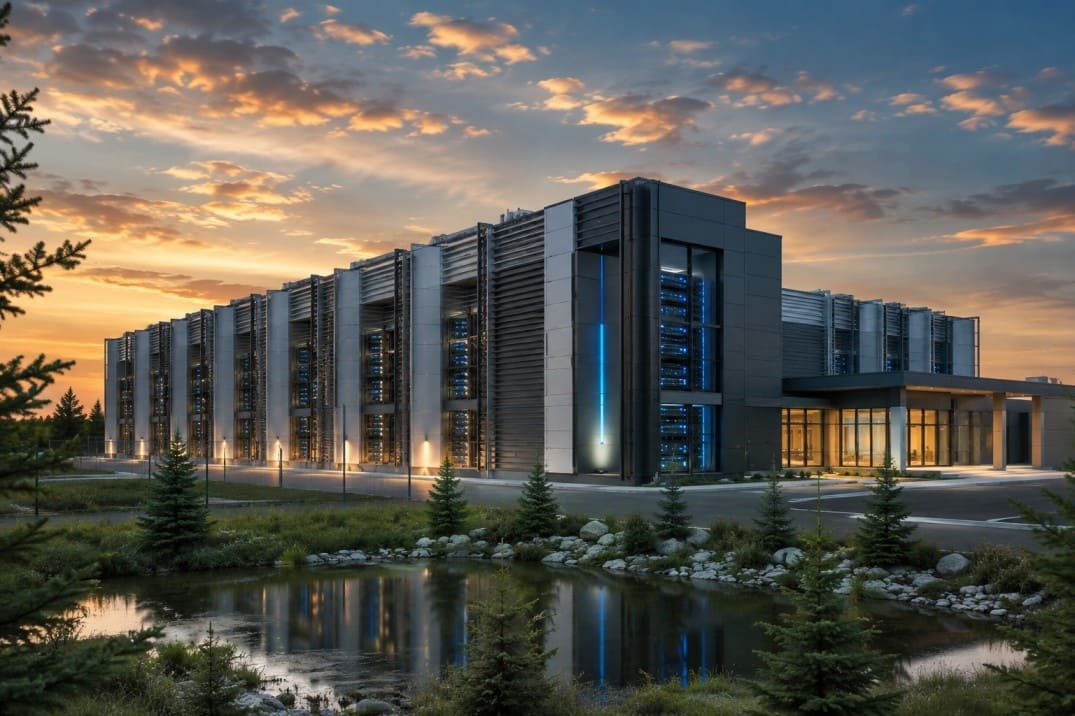
This facility represents a monumental milestone as the thirty-third data center in Meta’s global portfolio and its largest infrastructure investment outside the United States. Spanning nearly two hundred and seventy thousand square meters, the campus will occupy a physical footprint equivalent to thirty-three Canadian Football League fields. By establishing this foundational footprint in Western Canada, the company behind Facebook and Instagram is positioning itself to handle the staggering workloads required to train and deploy the next generation of generative artificial intelligence models.
For decades, the standard blueprint for hyperscale technology investments favored established American tech hubs or specific regions in Europe. However, the rapidly changing constraints of power availability, cooling efficiency, and regulatory agility have forced silicon valley giants to look northward. The choice of Sturgeon County, located just northeast of the Alberta capital, represents a carefully calculated balance between ideal climatic conditions, a highly skilled industrial workforce, and a deregulated energy market capable of accommodating unprecedented electricity demands.
Learn how global geopolitical partnerships are shaping technology and investment.
The Strategic Blueprint Behind Meta’s New Sturgeon County Infrastructure Hub
Selecting the ideal location for a one-gigawatt computing facility requires evaluating a complex matrix of environmental and logistical variables. Sturgeon County emerged as the winning jurisdiction due to a unique combination of geographic advantages and industrial readiness. The region is a core component of the Alberta Industrial Heartland, Canada’s largest hydrocarbon processing region, which provides direct access to robust utility corridors, sophisticated engineering talent, and a well-established network of industrial contractors.
Climatic conditions played a defining role in the site selection process. High-performance artificial intelligence chips generate intense thermal output, requiring continuous, heavy-duty cooling mechanisms to prevent hardware degradation. The naturally cool climate of the Edmonton region offers an invaluable advantage, allowing the facility to utilize ambient outside air for temperature regulation during a significant portion of the year. This geographical feature directly improves energy efficiency metrics and reduces the baseline operational costs associated with running massive supercomputers.
Furthermore, the local economic ecosystem provides an exceptional foundation for execution. The University of Alberta, located in nearby Edmonton, is globally recognized as a premier institution for artificial intelligence research, anchoring a deep talent pool of computing scientists and data engineers. Combined with the province’s deeply entrenched expertise in executing multi-billion-dollar industrial builds, the region provides Meta with the precise blend of human capital and physical space necessary to execute a project of this unprecedented magnitude.
Powering the Future of Artificial Intelligence Safely Off the Public Grid
The defining operational characteristic of the upcoming facility is its radical approach to energy procurement and generation. Hyperscale artificial intelligence data centers consume vast amounts of electricity, frequently putting severe strain on municipal power grids. To circumvent these challenges and ensure long-term operational resilience, Meta is fully funding its own localized power generation and transmission infrastructure, establishing a highly innovative off-grid and self-sustained utility model.
The primary long-term power source for the facility will be the newly approved Greenlight Electricity Centre, a four point six billion dollar natural gas-fired power plant developed by a prominent industrial consortium. This state-of-the-art facility is scheduled to begin operations in the second half of 2030, delivering an initial nine hundred and thirty-two megawatts of dedicated power directly to the campus, with regulatory permits already secured to eventually scale up to one point eight gigawatts. This localized approach shields regular provincial utility consumers from rate hikes or supply disruptions.
Because the data center is projected to come online two to three years before the dedicated power plant is fully operational, Meta has structured a multi-layered transition strategy. T
he tech giant will initially draw up to two hundred and fifty megawatts of electricity starting in the second half of 2028 through a long-term agreement with Capital Power, utilizing existing capacity. To balance the environmental impacts of using natural gas,
Meta has explicitly committed to completely offsetting its operational electricity consumption by aggressively investing in new clean and renewable energy projects across the province.
Revolutionizing Data Center Cooling Systems to Protect Precious Local Water Resources
Beyond energy consumption, the environmental footprint of large-scale computational hubs is frequently criticized due to high water usage.
Traditional data centers rely heavily on evaporative cooling systems, which evaporate millions of liters of pristine water daily to keep hardware cool. In a decisive effort to mitigate community concerns and align with modern corporate sustainability goals, Meta is introducing a sophisticated closed-loop liquid-cooling framework that completely redefines resource management.
This advanced architectural design combines closed-loop liquid cooling with dry cooling technologies, effectively eliminating operational water consumption from the active cooling process. The specialized system circulates an advanced cooling fluid through sealed pipes running directly across the hottest components of the server chips. The fluid absorbs the intense thermal energy and moves it to the exterior of the building, where massive fans dissipate the heat into the cool outdoor air before recycling the cooled liquid back into the computing stacks.
By implementing this self-contained configuration, the entire facility will consume less water annually than a typical local golf course. On-site water draw will be strictly restricted to essential domestic uses, facility maintenance, and mandatory fire protection systems. This design sets a highly progressive precedent for future hyperscale deployments across North America, proving that massive digital transformation does not have to come at the cost of vital local watersheds.
Boosting the Regional Economy Through Long Term Infrastructure Investment
The economic implications of Meta’s plans data center near Edmonton are vast, promising to inject significant capital directly into the regional economy.
The initial construction phase will create massive employment opportunities, requiring over three thousand skilled tradespeople, engineers, and laborers at peak building activity. This localized labor surge will provide immediate financial benefits to local contractors, hospitality providers, and auxiliary service businesses across Sturgeon County and the greater Edmonton metropolitan area.
Once the physical campus transitions from construction to active operations, it will support more than three hundred permanent, high-paying technical and administrative roles. These positions encompass systems administrators, network security experts, mechanical technicians, and facilities managers, creating a stable, long-term employment anchor in the region. Provincial estimates indicate that the completed facility will generate at least two hundred and fifty million dollars in annual revenue for the province, expanding the municipal tax base substantially.
To ensure that the surrounding community benefits directly from this arrival, Meta has allocated an initial sixty million Canadian dollars for immediate municipal improvements. This funding will target vital upgrades to regional road networks, heavy vehicle transport corridors, and local wastewater treatment systems, ensuring the local community can handle the increased industrial activity comfortably. Additionally, the company is launching its localized Data Center Community Action Grants to provide direct financial backing to regional non-profit organizations and educational institutions.
Balancing Environmental Activism with Aggressive Technical Innovation
While the economic and technical benefits of the Sturgeon County campus are clear, the sheer scale of the project has generated healthy public dialogue regarding long-term sustainability. Environmental organizations and local advocacy groups have highlighted the apparent paradox of powering advanced artificial intelligence infrastructure using natural gas-fired plants. Critics point out that the emissions intensity of the regional grid remains higher than the national average, sparking debates about the societal cost of the modern artificial intelligence revolution.
In response to these valid concerns, provincial authorities and corporate executives emphasize that the project is governed by strict regulatory frameworks. By compelling hyperscale developers to fund and build their own generation assets, the province ensures that industrial expansion does not jeopardize the stability of the public electrical system. Furthermore, Meta’s commitments to funding regional renewable energy projects provide a clear path toward offsetting the carbon footprint associated with the site’s early natural gas consumption.
This ongoing dialogue underscores the critical importance of corporate transparency and proactive community engagement. As the facility moves forward, the combination of advanced closed-loop water preservation, off-grid power independence, and major infrastructure investments serves as a realistic blueprint for balancing economic ambitions with real environmental accountability. The Sturgeon County development proves that with proper engineering, tech giants can expand their computing horizons while respecting the physical limits of the communities that host them.
Read how extreme weather is impacting infrastructure across the world.
Catalyzing a True Artificial Intelligence Revolution Across Western Canada
The arrival of Meta in the Alberta Industrial Heartland is widely viewed by industry analysts as the crown jewel of the province’s long-term digital economic strategy. By successfully attracting one of the world’s primary technology heavyweights, the region has demonstrated its ability to compete directly with premier global tech hubs. This massive anchor project is highly likely to catalyze a clustering effect, drawing in auxiliary software providers, hardware manufacturers, and specialized technical services eager to operate near a massive hyperscale node.
This monumental shift positions the province at the absolute forefront of the national digital economy. With several other gigawatt-scale data center proposals currently moving through various stages of regulatory review, the Edmonton metropolitan area is rapidly evolving into a major center for cloud computing and artificial intelligence development. The massive infrastructure investments made today ensure that the local economy will remain resilient, diversified, and highly competitive in an increasingly automated world.
Ultimately, Meta’s historic expansion into Western Canada highlights the deep convergence of physical energy infrastructure and digital innovation. The Sturgeon County project stands as a powerful testament to what can be achieved when forward-looking public policy aligns with massive corporate investment. As the physical structures take shape over the coming years, the project will serve as a global model for sustainable, high-efficiency, and community-minded hyperscale development, safely powering the global artificial intelligence revolution from the heart of Canada.
The finalization of Meta’s plans data center near Edmonton fundamentally anchors Western Canada within the global digital hierarchy, yet the true legacy of this project lies in how it balances immense computational ambition against regional environmental realities. By executing a landmark $13 billion blueprint in Sturgeon County, the province of Alberta has successfully auditioned for a starring role in the global artificial intelligence boom. However, an infrastructure project of this unprecedented scale carries a complex matrix of advantages and systematic challenges that will shape regional policy for the next generation.
The Balancing Act: Weighing the Regional Trade-Offs
| System Vector | Pros (The Catalyst Benefits) | Cons (The Friction Points) |
| Grid Reliability & Economics | Generates $250M in annual provincial revenue and slashes public transmission costs by up to 6%. | Natural gas demands risk increasing baseline wholesale fuel prices for regular rate-payers. |
| Environmental Footprint | Complete reliance on advanced closed-loop dry cooling preserves the vital local watershed. | Lock-in of a dedicated 932 MW natural gas plant adds roughly 3 megatonnes of annual $CO_2$ emissions. |
| Labor & Infrastructure | Brings 3,000 peak construction jobs and directly injects $60M into municipal road upgrades. | Tightens the regional trade labor market, driving intense wage competition against other local sectors. |
| Community Relations | Diversifies the county’s tax base to structurally stabilize residential property taxes. | Approved strictly under pre-zoned industrial permits, leaving some local residents feeling bypassed by a lack of public consultation. |
Ultimately, the ultimate implication of the Meta data center Sturgeon County hub extends far beyond the physical server racks and transmission lines occupying the Alberta Industrial Heartland. It represents a living test case for a “bring your own power” industrial framework proving that technology giants can scale their physical footprints if they absorb the systemic costs of their own infrastructure footprint. As the campus transitions from blueprint to operational reality over the coming years, it will serve as the definitive benchmark for how sovereign energy grids, rural municipalities, and hyperscale tech entities negotiate the high-stakes trade-offs of the modern AI revolution.

Leave a Reply