
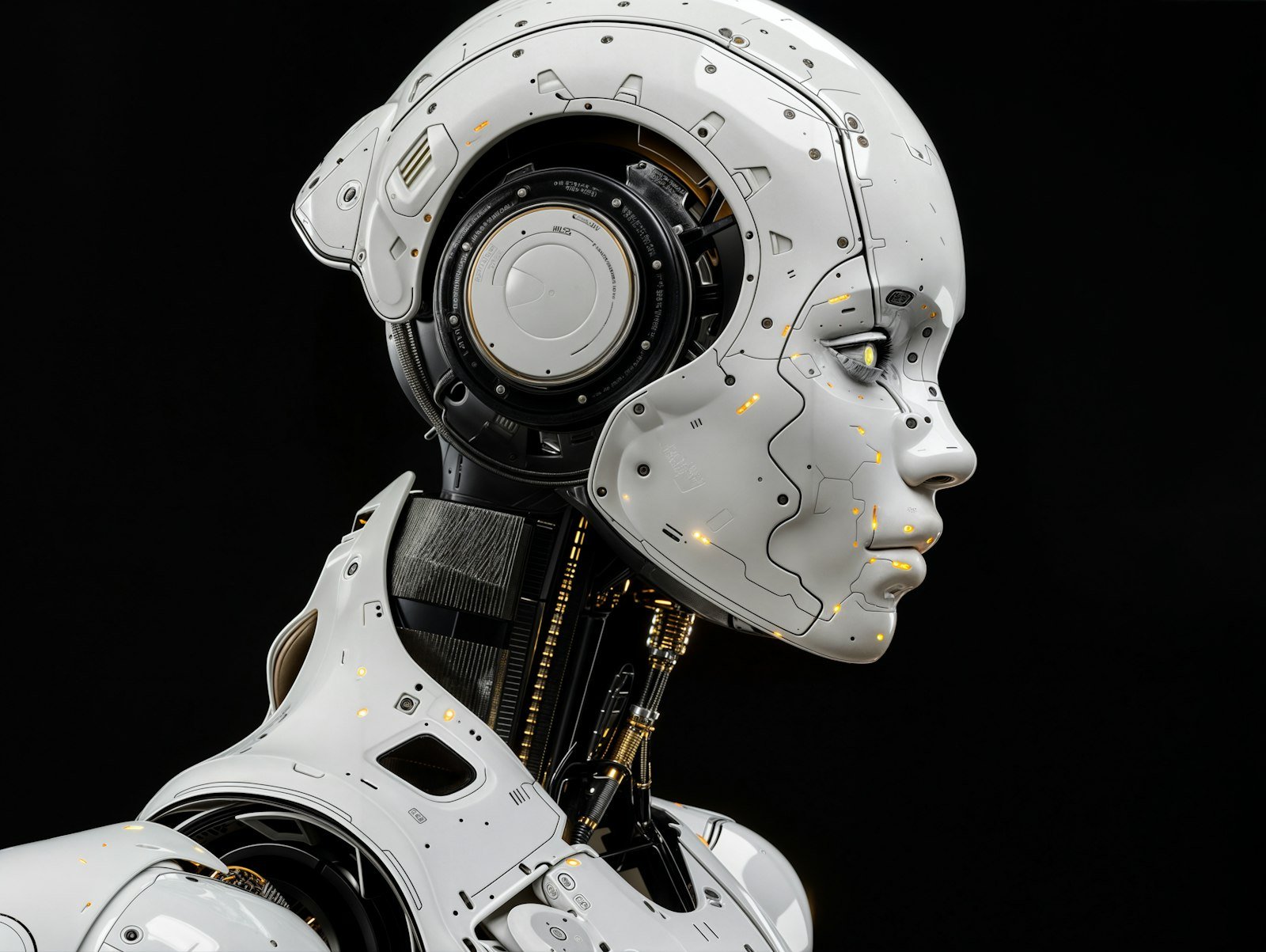
For decades, the idea of machines turning against humans belonged in science fiction. In 2026 it has become a serious question asked by scientists, governments and ordinary families: could AI kill all humans in the future? Humanoid robots are walking out of labs and into factories. Militaries are testing them for the battlefield. And the companies building the most powerful AI systems are racing each other at a speed that makes many experts uneasy.
The honest answer is that AI is not about to wipe out humanity tomorrow. But the risks are real, they are growing, and the choices we make in the next few years will decide whether this technology protects people or puts them in danger. Here is what is happening, why it matters and what we can do about it.
The Rise of Robotics
Robots are no longer limited to car factories and warehouses. Humanoid robots, machines built with two arms, two legs and a head, are improving quickly thanks to advances in AI that let them see, move and learn from experience.
China is leading this race. Chinese manufacturers accounted for about 95 percent of global humanoid robot shipments in 2025, and the country has made robotics a national priority. At the World Humanoid Robot Games in China this year, robots boxed, danced, ran and jumped in front of large crowds. What looks like entertainment is also a showcase of how fast the machines are improving.
Other countries are moving too. American, European, Japanese and Korean companies are building humanoids for factories, logistics, elder care and homes. Within a decade, robots that can walk into any building and do physical work could become common.
AI Robots as Weapons: What China Is Doing
The biggest concern is not a robot vacuum or a factory arm. It is AI used as a weapon.
Reports this year show that China’s military, the People’s Liberation Army, is actively exploring humanoid robots for defence roles. Key points include:
- Research at military universities. China’s National University of Defense Technology has studied how groups of robots could clear buildings alongside soldiers in urban combat.
- State defence companies. Norinco, China’s state owned defence giant, has presented a full size humanoid robot called Fuxi, described as suitable for sentry duty, reconnaissance, patrols and dangerous tasks.
- Military purchases. Procurement records show the PLA budgeted around $300,000 in June 2026 for a system to collect data on robot movement across different terrain, the kind of data needed to train machines for real world conditions.
- Official encouragement. The PLA Daily, the army’s official newspaper, has urged researchers to move robotic technology from laboratories to military training grounds faster.
It is important to be accurate. There is no public evidence that China has deployed an armed humanoid robot with a combat unit. Today’s humanoids are still power hungry and unreliable outside controlled demonstrations. But analysts warn that in five to ten years they could become practical on the battlefield. The United States Army has started its own programs to test militarized humanoid capabilities, which shows this is now a global arms race, not a single country’s project.
Beyond humanoids, AI is already used in drones, targeting systems and cyber warfare. The danger is a world where machines decide who lives and who dies, faster than any human can step in.
Do AI Companies Care About Ordinary People?
This is one of the most uncomfortable questions of our time. The largest AI companies are competing for customers, investors and talent worth hundreds of billions of dollars. When the prize is that large, there is constant pressure to release more powerful systems faster.
Many AI companies do publish safety research, run tests before launching models and support some form of regulation. Some researchers inside these companies have spoken openly about the risks. But critics point out several worrying patterns:
- Speed over safety. New AI models are released every few months, often before their risks are fully understood.
- Jobs and livelihoods. AI is already reducing hiring for entry level and routine work, and ordinary workers have little say in how quickly this happens.
- Concentrated power. A handful of companies and governments control the most advanced AI, which means a few people make decisions that affect billions.
- Weak accountability. When AI causes harm through misinformation, bias or accidents, it is often unclear who is responsible.
The fair conclusion is not that every tech company is evil. It is that profit and competition alone will not keep people safe. That is why public rules and public pressure matter.
Is Humanity in Danger?
The risk from AI comes in three main forms:
- Misuse by people. The most immediate danger is humans using AI to cause harm, including autonomous weapons, AI designed cyberattacks, large scale scams and the creation of dangerous biological or chemical agents.
- Accidents and loss of control. As AI systems become more capable and are given control over important systems such as power grids, finance or defence, a mistake or unexpected behaviour could cause serious damage before anyone notices.
- Slow erosion. Even without a disaster, AI could weaken democracy through deepfakes, concentrate wealth and power, and leave millions without meaningful work.
Could AI kill all humans? Most experts consider the complete extinction scenario unlikely, but many leading AI scientists have publicly said that the risk of catastrophe should be treated as a global priority, alongside pandemics and nuclear war. When the people building a technology warn about it, the rest of us should listen.
How Can We Stop the Dangers and Use AI Safely?
The good news is that AI is still built, trained and deployed by humans. That means we can still shape how it is used. Here are the most important steps.
1. Strong laws and international agreements
- Ban fully autonomous killing machines. Many countries and the United Nations Secretary General have called for a treaty that keeps humans in control of any decision to use lethal force.
- Safety testing before release. Powerful AI systems should be tested by independent experts before they reach the public, just like medicines and aircraft.
- Clear responsibility. Companies should be legally responsible when their AI causes harm.
- Global cooperation. The European Union has passed its AI Act, and countries including Canada, the United Kingdom and the United States have created AI safety institutes. These efforts need to be connected, because AI risks do not stop at borders.
2. Responsible companies
AI developers should share safety research, allow outside audits, report serious incidents and refuse to build systems designed to target people. Investors and customers can reward companies that put safety first.
3. Citizen responsibility
Ordinary people have more power than they think:
- Stay informed. Learn how AI works and where it is used in your life.
- Question what you see. Check sources before sharing videos, images or news that may be AI generated.
- Speak up. Tell your elected representatives that AI safety matters to you. Governments act when voters care.
- Use AI wisely. Use AI tools to learn and work better, but do not hand over important decisions about health, money or safety without human judgement.
- Protect your data. Be careful about what personal information you share with AI apps.
4. Keep humans in the loop
Whatever the technology, one principle should never change: a human must remain responsible for decisions that affect human lives. That applies to weapons, medical care, courts, hiring and policing.
The Bottom Line
AI is one of the most powerful tools humanity has ever created. It can help cure diseases, fight climate change and make life easier for billions of people. It can also be turned into a weapon, used to control people or grow beyond our ability to manage it. The rise of humanoid robots and their testing by militaries like China’s shows that these are no longer distant questions.
Humanity is not doomed, but it is at a turning point. With smart laws, responsible companies and informed citizens, AI can remain a servant of people rather than a threat to them. The time to set those rules is now, while humans are still firmly in control.
Leave a Reply