
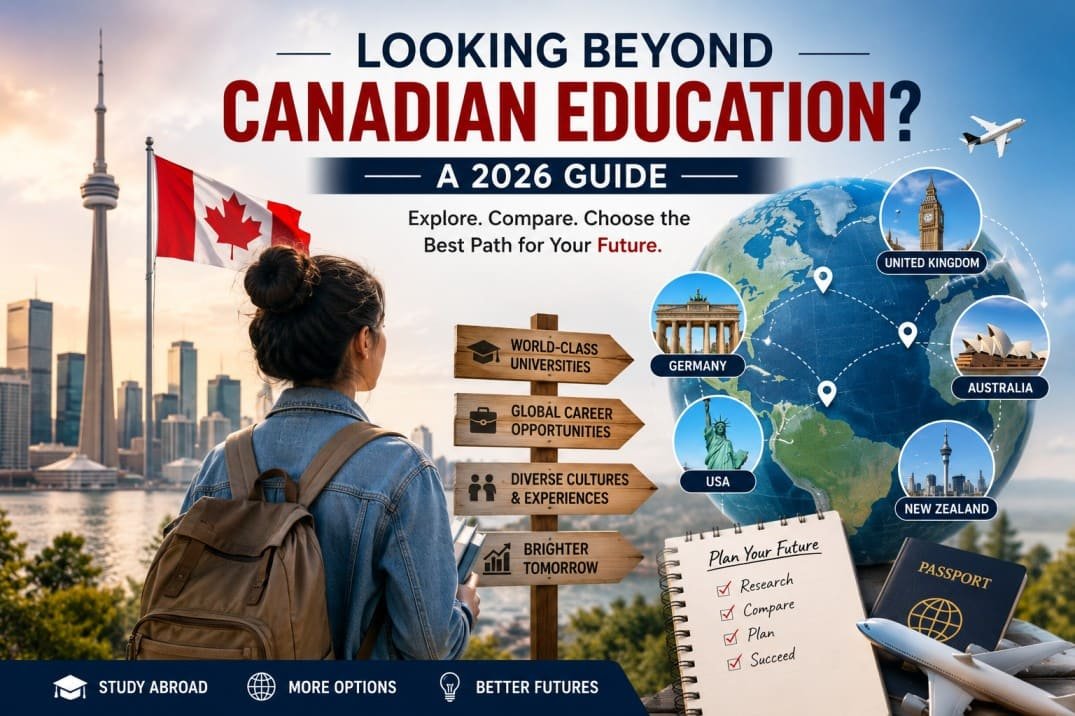
For decades, Canada has been one of the world’s most popular destinations for higher education. Every year, hundreds of thousands of students arrive from countries such as India, China, Nigeria, the Philippines, and Brazil, hoping to earn a globally recognized degree while building a future in one of the world’s most welcoming countries.
Canadian universities have earned a reputation for academic excellence, cutting-edge research, and multicultural campuses. For many international students, studying in Canada has also been seen as a pathway to valuable work experience and, for some, permanent residency.
But over the past few years, something has changed.
Conversations among parents, students, and education consultants increasingly revolve around questions that were far less common a decade ago. Is studying in Canada still affordable? Will graduates find good jobs? Can students secure housing? Are there better options elsewhere?
These questions don’t mean Canada has lost its appeal. Instead, they reflect changing economic conditions, policy updates, and evolving priorities among families making one of the biggest financial decisions of their lives.
Rather than asking whether people have stopped choosing Canada, a better question is this: Are international and immigrant families looking beyond Canadian education?
The answer appears to be that some families are reassessing their options, while many others continue to view Canada as one of the best places to study. Understanding why requires looking beyond headlines and examining the factors shaping today’s education landscape.
Why Canada Became a Global Education Destination
Canada’s popularity didn’t happen overnight.
For years, the country offered a combination of advantages that few destinations could match.
Students were attracted by internationally respected universities, relatively safe cities, multicultural communities, and opportunities to gain work experience after graduation.
Many families also appreciated Canada’s reputation for political stability, high quality of life, and welcoming immigration pathways.
Universities such as the University of Toronto, McGill University, the University of British Columbia, and the University of Alberta consistently rank among the world’s leading institutions.
Official information:
https://www.educanada.ca
For many students, earning a Canadian degree represented not only an educational achievement but also an investment in future career opportunities.
Rising Costs Are Changing Family Decisions
One of the biggest reasons some families are reconsidering Canada is cost.
A decade ago, Canada was often viewed as a more affordable alternative to countries like the United States and the United Kingdom.
Today, many students find that the total cost of studying has increased significantly.
Families must now budget for:
- Tuition fees
- Accommodation
- Food
- Transportation
- Health insurance
- Study materials
- Everyday living expenses
For many households, especially those paying in foreign currencies, these costs have become much harder to manage.
Instead of focusing only on tuition, families are increasingly calculating the overall return on investment.
Housing Has Become a Major Concern
Imagine arriving in a new country after receiving admission to your dream university, only to discover that finding affordable accommodation is one of your biggest challenges.
This has become a reality for many students across Canada.
Cities such as Toronto, Vancouver, and even smaller education hubs have experienced rising rental costs in recent years.
Students often begin searching for housing months before classes start.
Some choose shared accommodation, while others consider studying in smaller cities where living expenses are lower.
Housing affordability has become an important factor influencing education decisions.
Changes to International Student Policies
Another reason families are exploring different options is the evolving policy environment.
The Canadian government has introduced several changes intended to improve the sustainability of the international education system.
These measures include updates affecting:
- Study permit applications
- International student intake
- Institutional accountability
- Provincial planning
The goal is to ensure educational institutions have adequate resources while balancing housing and infrastructure needs.
Although these changes are not designed to discourage genuine students, they have encouraged families to examine all available options before making a final decision.
Parents Are Thinking Beyond Rankings
A university’s global ranking still matters, but it is no longer the only factor influencing decisions.
Parents today are asking broader questions.
Will my child find affordable housing?
Can they work part-time?
Will they secure employment after graduation?
How much debt will they accumulate?
Is there a clear pathway toward building a successful career?
These practical considerations have become just as important as academic reputation.
Exploring Alternatives to Canada
Canada remains highly attractive, but it is no longer the only destination competing for international talent.
Families are increasingly researching universities in countries such as:
Germany
Germany has gained attention because many public universities offer low-cost or tuition-free education for eligible students, although living expenses and language requirements still need careful consideration.
Ireland
Ireland continues attracting students interested in technology, finance, and business programs while offering access to the broader European job market.
Australia
Australia remains a popular destination because of its internationally recognized universities and strong research opportunities.
Like Canada, however, it has also introduced changes to immigration and student policies in recent years.
Home-Country Universities
Some families are choosing high-quality universities closer to home, particularly where educational standards have improved and costs remain significantly lower.
Instead of assuming international education is always necessary, they are comparing value, affordability, and career outcomes.
What Students Value Most Today
The priorities of today’s students are evolving.
While earning a respected degree remains important, many are also thinking about life after graduation.
Students increasingly evaluate:
- Graduate employment opportunities
- Internship availability
- Industry partnerships
- Cost of living
- Immigration policies
- Safety
- Career growth
- Long-term financial return
Education is no longer viewed as a standalone investment—it is part of a broader life plan.
Canada Still Offers Significant Advantages
Despite these changing trends, Canada continues to offer many strengths that attract students from around the world.
Its universities remain globally respected, research opportunities continue to grow, and employers value Canadian qualifications across many industries.
Canada also offers a multicultural environment where students from different backgrounds can learn together, build professional networks, and develop international perspectives.
For many families, these benefits continue to outweigh the challenges, particularly when they choose institutions and cities that align with their financial situation and career goals.
What Does the Recent Data Actually Show?
Headlines about Canada’s education system often grab attention, but the reality is more nuanced. Recent government policy changes and economic conditions have influenced how families make decisions, yet Canada remains one of the world’s leading destinations for international education.
The number of study permit applications, the countries students come from, and the programs they choose continue to evolve. Instead of indicating that students no longer want to study in Canada, the data suggests that many families are becoming more selective.
Today, students are spending more time comparing destinations, calculating costs, and evaluating long-term career prospects before making a commitment.
Official statistics can be found through Immigration, Refugees and Citizenship Canada (IRCC) and Statistics Canada.
How Immigrant Families Are Making Education Decisions
For many immigrant parents already living in Canada, education remains one of their highest priorities.
However, their decision-making process has become more practical than ever before.
Rather than automatically choosing the nearest university or the highest-ranked institution, families are asking questions such as:
- Which city offers the best balance between education and affordability?
- Will my child graduate with significant debt?
- Are there internship opportunities?
- What is the graduate employment rate?
- Can my child find affordable housing?
- Does this degree match future labour market needs?
These considerations reflect careful financial planning rather than declining confidence in Canadian education.
Career Outcomes Matter More Than Ever
A university degree is no longer viewed as the finish line.
Instead, students and parents increasingly see higher education as the first step toward a successful career.
Programs with strong employment prospects often receive greater attention than those offering prestige alone.
Fields experiencing consistent demand include:
Healthcare
Canada continues to need nurses, physicians, pharmacists, and allied health professionals.
Technology
Software development, cybersecurity, artificial intelligence, and data science remain attractive career paths.
Skilled Trades
Electricians, plumbers, construction managers, welders, and heavy equipment technicians continue to experience labour shortages.
Business and Finance
Accounting, financial analysis, supply chain management, and business analytics remain popular among international students.
Families increasingly evaluate how well university programs prepare graduates for these opportunities.
Canada’s Universities Continue to Adapt
Canadian colleges and universities are responding to changing student expectations.
Many institutions now offer:
- Greater career counselling.
- Expanded internship opportunities.
- Industry partnerships.
- Entrepreneurship programs.
- Flexible learning options.
- Mental health support.
- International student services.
Universities recognize that students are seeking more than a degree—they want practical experience and clear career pathways.
Why Some Students Are Choosing Smaller Cities
For years, Toronto and Vancouver dominated conversations about studying in Canada.
Today, many students are considering alternatives.
Cities such as Regina, Saskatoon, Winnipeg, Halifax, Fredericton, and St. John’s often offer:
- Lower living costs.
- More affordable housing.
- Smaller class sizes.
- Close-knit campus communities.
- Growing employment opportunities.
For some families, choosing a smaller city provides a better balance between affordability and educational quality.
Technology Is Changing How Students Choose Universities
Students today have access to more information than ever before.
Instead of relying solely on university brochures, they compare institutions using:
- Student reviews.
- Graduate employment statistics.
- Tuition calculators.
- Social media experiences.
- Campus tours.
- Virtual open houses.
Families also speak directly with alumni and current students before making decisions.
This research-driven approach means universities must compete not only on reputation but also on student experience and value.
The Future of Canadian Education
Canada’s education system continues to evolve.
Government policies, economic conditions, and demographic changes will influence how institutions attract students over the coming years.
Many experts believe Canada will remain one of the world’s leading education destinations because of its:
- High academic standards.
- Globally recognized qualifications.
- Research excellence.
- Diverse campuses.
- Strong quality of life.
- Stable political environment.
However, maintaining that position will require continued investment in housing, student support services, and infrastructure to ensure institutions can accommodate future demand.
Should Families Still Consider Canada?
For many students, the answer remains yes.
Canada continues to provide excellent educational opportunities across a wide range of disciplines.
The key difference today is that families are approaching the decision with greater care.
Instead of asking, “Should we study in Canada?” many are asking, “Which Canadian university, city, and program best fit our goals and budget?”
That shift reflects a more informed and strategic approach rather than a loss of confidence in Canadian education.
Students who research thoroughly, plan their finances, and choose programs aligned with labour market demand are likely to find Canada a rewarding place to study and build their careers.
Conclusion
The conversation surrounding Canadian education has changed significantly in recent years. Rising living costs, housing challenges, and evolving immigration policies have encouraged many international and immigrant families to think more carefully about where they invest in higher education.
However, this does not mean Canada has lost its appeal. Instead, it signals that families are becoming more informed consumers, weighing costs, career opportunities, quality of life, and long-term outcomes before making a decision.
Canada continues to offer internationally respected universities, diverse learning environments, strong research opportunities, and pathways into a dynamic labour market. For many students, these advantages remain compelling.
The future of international education in Canada will likely depend not only on academic excellence but also on affordability, student support, housing availability, and the ability of institutions to prepare graduates for meaningful careers.
For families willing to plan carefully and choose wisely, Canada remains one of the world’s most attractive destinations for higher education.
Beyond education, newcomers continue to contribute to Canadian communities. Learn more in our article on How Immigrants Are Making Canada’s Neighbourhoods Safe.


Leave a Reply