
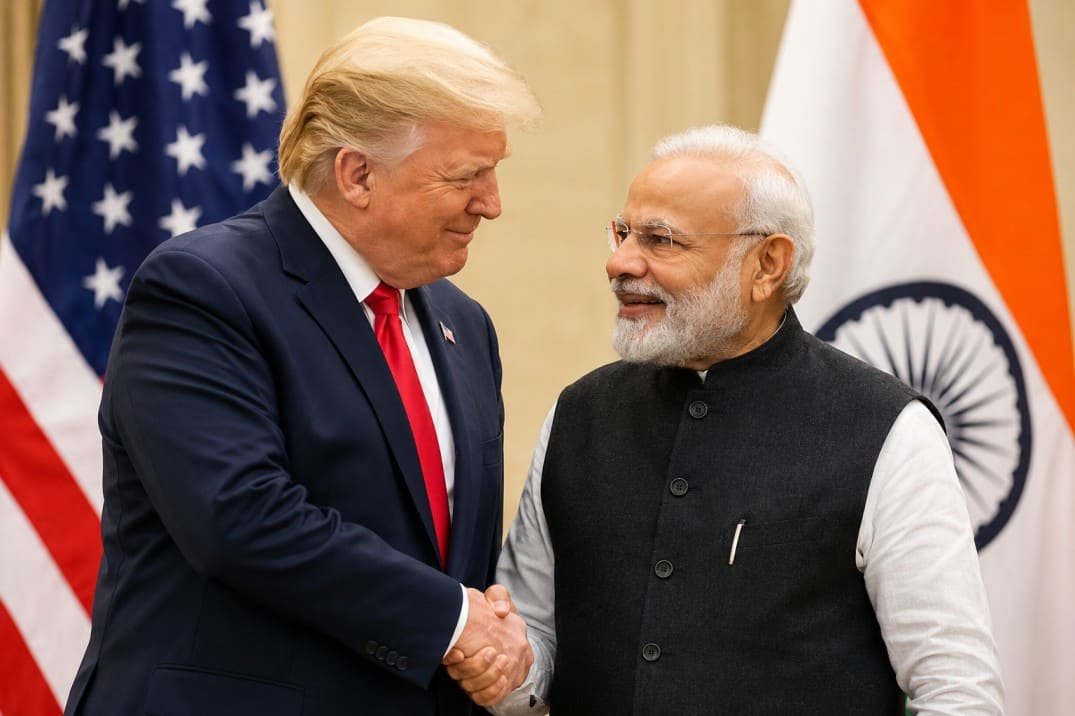
The global diplomatic arena constantly evolves as nations seek reliable partners to navigate complex geopolitical shifts. In recent years, one of the most consequential international alignments has been the deepening bond between Washington and New Delhi. To understand why USA supports current Indian Prime Minister Narendra Modi, one must look at how shared economic goals, defense integration, and regional security imperatives have forged a bipartisan consensus across American administrations. They relation between these countries happen to deepen with time.
What Defines the Geopolitical US Support for Narendra Modi
At its core, US support for Narendra Modi rests on a shared strategic vision for balance, stability, and open navigation across the Indo-Pacific region. Washington views India not just as a regional partner, but as an indispensable pillar of global balance.
- Indo-Pacific Regional Security: India serves as a key counterweight in Asia, leading multilateral frameworks like the Quad alongside the United States, Japan, and Australia. When it comes to asia, India has been leading the above all of the nations whether it is in partnerships or is it becoming one of the most trusted nation we do witness this at times of war that indian citizens are always favoured in times of trouble due to relations between these nations.
- Institutionalized Defense Initiatives: High-level frameworks such as the US-India COMPACT (Catalyzing Opportunities for Military Partnership, Accelerated Commerce & Technology) institutionalize long-term defense and economic collaboration.
- Global Strategic Autonomy: Washington respects Prime Minister Narendra Modi’s decisive leadership in positioning India as a confident global actor capable of shaping international trade and diplomatic outcomes. There bond deepens as both countries put forward to make efforts by signing deals, bringing investment for betterment of both the nations.
Why Washington Backs Prime Minister Narendra Modi
The fundamental drivers behind why the United States maintains strong alignment with the Indian leadership span economics, technological innovation, and domestic political synergies.
Bilateral frameworks like the TRUST initiative enable joint development across critical fields such as artificial intelligence, semiconductors, quantum computing, and space exploration. Furthermore, agreements focused on defense co-production,including jet engines, autonomous systems, and semiconductor fabrication facilities,deepen defense interoperability between both militaries.
Technology has become a cornerstone of the India–U.S. strategic partnership, with both nations collaborating on artificial intelligence, semiconductors, and digital innovation. Top AI Innovations to Watch in August 2026 to understand the latest breakthroughs shaping the global tech landscape.
As one of the world’s fastest-growing major economies, India presents lucrative opportunities for American enterprise, clean energy technology, and infrastructure investment. Elevating these ties, an influential community of over 4.5 million Indian-Americans acts as a thriving bridge between both capitals, ensuring sustained bipartisan support for Prime Minister Narendra Modi in the US Congress.
Impact of US-India Strategic Partnership
The expanding alignment between Washington and New Delhi yields tangible results that reach far beyond bilateral treaties, reshaping the global order into a more stable and resilient ecosystem. By establishing joint manufacturing networks for active pharmaceutical ingredients (APIs), microchips, and clean energy tech, both nations protect critical industries against volatile supply chain disruptions.
At the same time, joint naval operations and intelligence sharing secure vital trade corridors across the Indian Ocean, while collaborative AI infrastructure roadmaps ensure democratic values guide the development of emerging technologies.
The United States and India make exceptionally good partners because their strengths are complementary: America offers world-class innovation, capital, and advanced technology, while India contributes massive scale, high-tech engineering talent, and a strategic geographic location. Together, their aligned focus on democratic governance, economic security, and regional stability allows them to balance global power dynamics effectively without relying on rigid formal military pacts.
India’s international influence extends beyond geopolitics into sectors such as sports, technology, and innovation, as explored in Can India Become a Global Sports Power by 2036?, reflecting the country’s growing global ambitions.
American Strategic Motivations and Views on India
America supports India primarily because Washington views New Delhi as a crucial democratic anchor and economic counterweight in the Indo-Pacific region. The United States considers India an indispensable “Major Defense Partner” and a central pillar in maintaining regional security through alliances like the Quad. From Washington’s perspective, India is seen as a rising global power, a vital technological hub, and a key trade partner whose stability, growing economy, and vibrant diaspora significantly align with long-term American geopolitical interests.
Bilateral Agreements and International Wartime Support
The ongoing “US deal” with India is anchored in major security and technology initiatives, including the US-India COMPACT framework, the 10-Year Major Defense Partnership Framework, and foundational agreements like LEMOA and BECA for defense intelligence and logistics sharing. In terms of military support during conflict or war, India maintains a multi-aligned defense strategy: historical military hardware, heavy weaponry, and missile tech are supported by Russia, while modern intelligence sharing, high-tech surveillance equipment, jet engines, and precision technology are supplied by the United States, Israel, and France.
The ongoing alliance between Washington and New Delhi stands as a structural cornerstone of 21st-century diplomacy. By leveraging pragmatic cooperation, economic synergy, and shared regional priorities, why USA supports current Indian Prime Minister Narendra Modi becomes clear: it is a mutually beneficial strategy designed to ensure long-term global stability and economic resilience. The countries have shared a bond over time where they happen to become partners to represent themselves at a global stage. From startegic support to bilateral agreements the countries have been at its forefront to being in support at all times.

Leave a Reply