
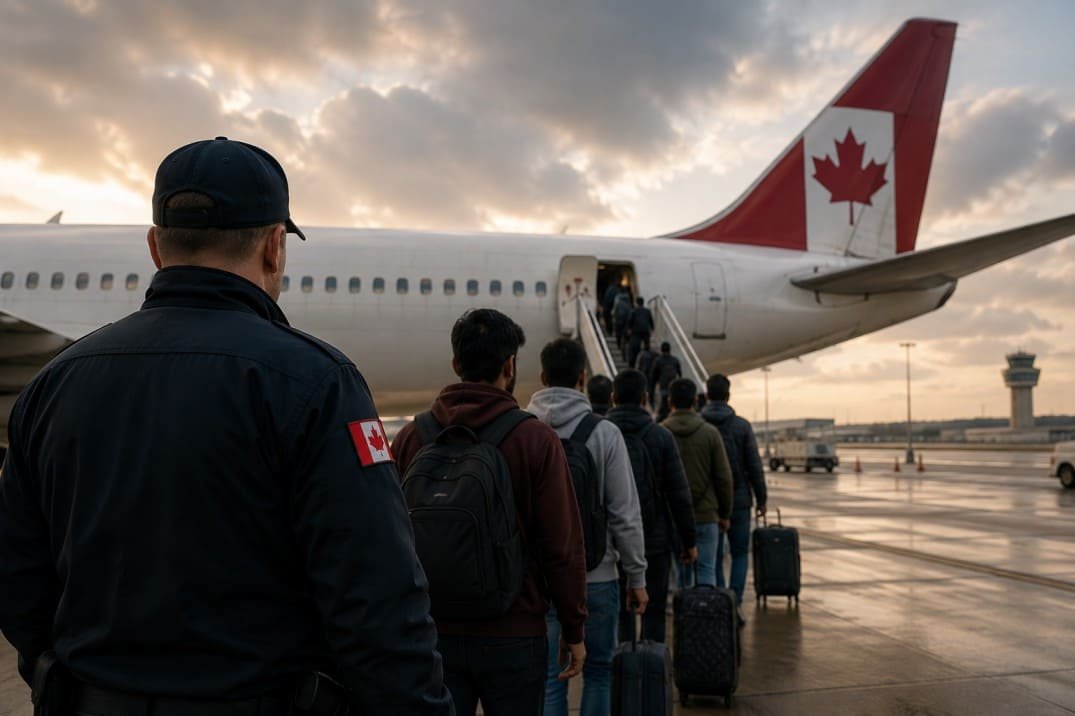
For thousands of hopeful families, the long-cherished dream of establishing a permanent future in North America is encountering a firm new reality. Official Canada Border Services Agency figures confirm that Canada deported 3323 Indian nationals 2026 during the first six months of the year alone. This rapid rise places India at the top of Canada’s global deportation list and marks a decisive turning point in federal border enforcement policy.
What the 2026 Border Enforcement Data Reveals About Surging Removals
Between January and June 2026, Canadian border officials executed 3,323 removals involving Indian citizens. This half-year total represents nearly 88 percent of the 3,779 deportations recorded across all twelve months of 2025, which was itself a historical high. India has now surpassed Mexico to become the leading country of origin for deportations from Canada, reversing a multi-year trend where Mexican citizens consistently occupied the top spot. Annual removals of Indian nationals have steadily escalated from 603 in 2021 to 786 in 2022, 1,132 in 2023, 2,004 in 2024, and 3,779 in 2025. Official records also show that 7,669 Indian nationals remain in Canada’s active removal in progress inventory, indicating that the overall pace of enforcement is set to continue.
Why Tightening Federal Regulations Triggered Increased Deportations
The sharp acceleration in enforcement actions stems directly from broader federal policy adjustments aimed at controlling overall temporary resident volumes, imposing strict international student caps, and increasing workplace compliance. Foreign nationals face removal primarily due to non-compliance with student or work permit terms, visa overstays, unapproved political asylum claims, and the discovery of fraudulent enrollment or admission documentation. Under Canadian immigration framework, individuals issued departure orders must leave voluntarily within thirty days.Even the immigration is tigtening the rules. One must read about Canada’s changing immigration landscape to understand the changing immigration patterns.
Failure to depart automatically converts the directive into a formal deportation order, which imposes permanent re-entry bans unless explicit government authorization is granted. Additionally, Canadian security agencies have expanded investigations targeting organized crime and permit exploitation, further driving removal proceedings.
What the Economic and Social Impact Means for Future Migration Pathways
This substantial enforcement push carries major structural consequences across global talent networks, educational institutions, and applicant families. Prospective students and workers face significantly higher application scrutiny, lower approval rates, and rigorous background verification. Families investing significant financial resources into international education face immediate financial exposure if study permits are revoked or visa conditions are breached. Immigration consultancies, colleges, and employers must now adapt to unprecedented regulatory oversight to maintain system compliance.Canada’s evolving cities and opportunities
Surging Trends in Immigration Enforcement
While the sharp escalation in removals has drawn global headlines, Canada deporting Indian nationals is part of an ongoing multi-year trend that previously peaked in 2020 when 1,424 Indian citizens were removed.
Although Mexican nationals consistently topped Canada’s deportation lists between 2021 and 2025, Indian removals steadily climbed from 603 in 2021 to 786 in 2022, 1,132 in 2023, 2,004 in 2024, and a record 3,779 in 2025.
The current figure of 3,323 removals in the first half of 2026 marks India’s return to the top position nationwide, reflecting how federal policy shifts, stricter student visa caps, and intensified audits on visa overstays, rejected asylum claims, and permit fraud have accelerated historical border enforcement measures into unprecedented territory.
What the Far-Reaching Social and Economic Impact Means for Applicants
This enforcement surge carries widespread implications across global talent pipelines, international education consultancies, and prospective migrant families. Applicants now face unprecedented scrutiny during document verification, leading to substantially higher visa refusal rates. Families who liquidate assets or invest life savings into foreign tuition face immediate financial loss if study conditions are breached or permits are revoked. Furthermore, educational institutions and employers in Canada must maintain strict attendance and employment compliance reporting, transforming how international temporary resident programs operate on a structural level.
Navigating a Changing Global Immigration Environment
Navigating today’s tight international immigration landscape requires Indian students and workers to prioritize complete digital paperwork integrity and strict compliance with permit conditions. With global destinations like Canada, the UK, the US, and Australia enforcing enhanced automated document verification, higher financial proof thresholds, and tight caps on part-time work hours, every detail must be 100% accurate and verifiable at the source. To avoid risk of visa cancellation, deportation, or future bans, migrants must strictly observe working hour limits (such as Canada’s 24-hour weekly cap or Australia’s 48-hour fortnightly limit), maintain required course attendance, and report address or status changes well within mandated deadlines.
To secure long-term career prospects, Indian migrants should strategically align their qualifications with national shortage sectors such as STEM, healthcare, construction, and specialized technical trades where post-study work permits and employer sponsorship pathways remain prioritized. Rather than relying on generic degrees or a single country’s visa system, individuals should build multi-country contingency plans across regions with transparent points-based economic pathways, while maintaining valid professional credentials and networks back home in India as a strategic safety net. When a national leaves his country. they do leave it in a hope that they will receive best of the services in other country however, that has become a different scenario with changing times.

Leave a Reply