
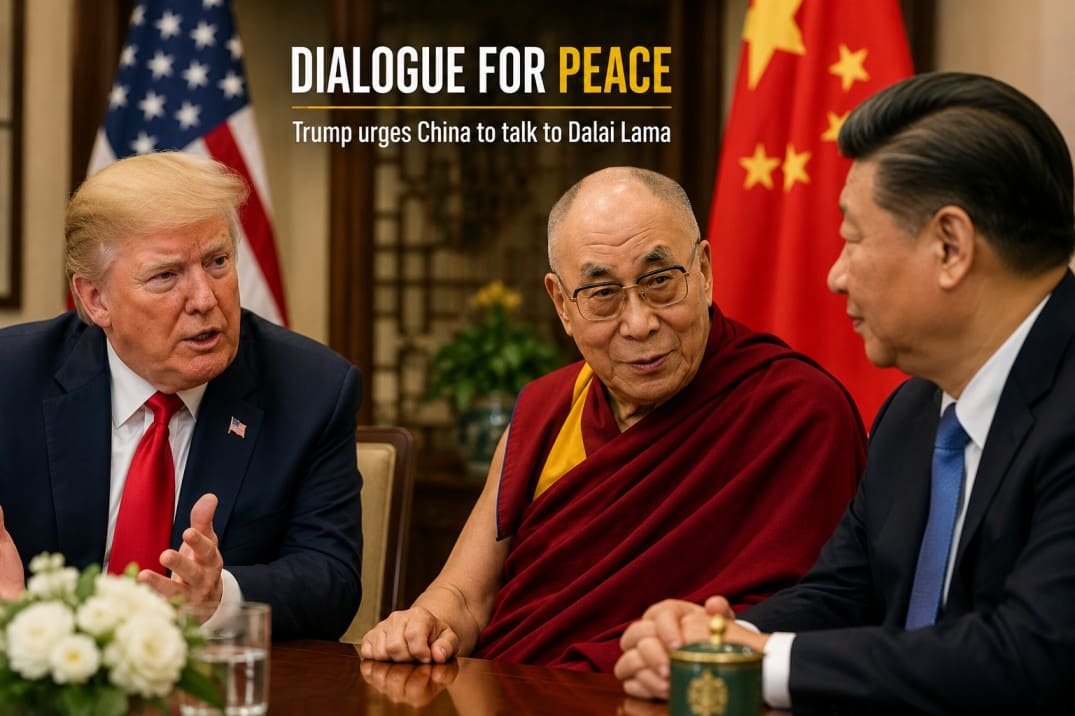
A Dramatic Pivot in Trans Pacific Diplomatic Pressure
The geopolitical landscape of Washington Beijing diplomatic relations experienced another profound shockwave when the White House renewed its aggressive stance regarding the autonomy of East Asia’s most contested plateau. Under explicit direction from the executive branch, the US State Department formally challenged Beijing’s decades-long isolation of the Tibetan leadership in exile. The core message emanating from the current administration is unmistakable: the United States expects the Chinese Communist Party to abandon its rigid preconditions and re-engage in direct, substantive negotiations with the spiritual heart of the region.
This assertive foreign policy push is not merely a sudden rhetorical shift; it is a calculated re-activation of institutional mechanisms established during previous legislative battles. By publicly asserting that Trump wants China to talk to Dalai Lama, Washington is signaling that it intends to use human rights in Tibet as a key point of leverage in broader cross border strategic negotiations.
The timing of this diplomatic maneuver is deeply significant, arriving at a moment when both superpowers are already locked in intense disagreements over trade tariffs, technological espionage, and territorial lines across the South China Sea.
For the international community, this development brings a complex mix of renewed focus and strategic uncertainty. While previous American administrations have historically issued periodic statements supporting the cultural preservation of the plateau, the current approach ties these humanitarian concerns directly to the economic and security framework of the United States. By elevating the Tibetan question to the forefront of bilateral talks, the administration is intentionally testing the boundaries of China’s diplomatic tolerance.
The Legislative Foundation Behind the Call for Strategic Dialogue
To truly understand why the American establishment is pursuing this specific path, one must look closely at the modern legislative evolution of US policy on Tibet. This is not a policy built on vague, executive whims, but rather a strategy anchored in robust, bipartisan laws passed by the United States Congress. The structural foundation of this policy was firmly solidified when the historic Tibetan Policy and Support Act was officially signed into law, an act that radically upgraded Washington’s legal mandates regarding the region’s spiritual sovereignty.
This comprehensive piece of legislation did not merely offer moral encouragement; it established concrete statutory requirements that dictate how the US government must handle affairs related to Lhasa. The law explicitly states that any decisions regarding the identification and installation of the next Dalai Lama rest solely within the authority of the current spiritual leader, Tibetan Buddhist scholars, and the Tibetan people themselves. By legally formalizing this stance, the United States pre-emptively rejected any state-sanctioned selection process manufactured by the authorities in Beijing.
Furthermore, these legal frameworks mandate that the State Department actively promote substantive dialogue between Chinese officials and the democratically elected leaders of the Central Tibetan Administration. The law even went so far as to authorize targeted economic sanctions and visa restrictions against any foreign officials who intentionally meddle in the succession process. Therefore, when the modern White House demands that Beijing open lines of communication with the exiled leadership, it is executing a multi-layered legal strategy designed to deter unilateral state interference in centuries-old religious traditions.
Deciphering Beijing’s Fierce Response to External Interventions
The reaction from the upper echelons of the Chinese leadership was swift, unyielding, and entirely predictable. Following the public reiteration of American support for the exiled spiritual network, China’s Foreign Ministry spokesperson Mao Ning issued a stern counterpoint during a press briefing in Beijing. The official state position remains absolutely rigid: all matters concerning the plateau are viewed strictly as internal sovereign affairs that are completely closed to foreign scrutiny or external mediation.
From the perspective of the Chinese state apparatus, the global campaign led by the Central Tibetan Administration is viewed not as a fight for cultural preservation, but as a sophisticated movement aimed at regional separatism. Beijing consistently maintains that the region was peacefully liberated from an oppressive, feudalistic serfdom in 1950, and that subsequent state investments have brought unprecedented economic modernization and stability to the local population. Consequently, the Chinese response to Tibet dialogue proposals from Western powers is to label them as flagrant violations of international norms regarding domestic non-interference.
This deep-seated diplomatic gridlock is further complicated by the ongoing struggle over the future of the spiritual office itself. As the current Nobel Peace Prize laureate approaches his advanced nineties, the race to control the narrative of his inevitable reincarnation has intensified. While the exiled leadership insists that a future successor will be born in a free nation, Beijing relies on a state-approved historical ritual involving a ceremonial golden urn to validate a candidate of its own choosing. This stark division ensures that any conversation regarding diplomatic dialogue remains trapped in a profound ideological stalemate.
Beijing Rejects Western Intervention as Sovereign Encroachment
The response from the Chinese state apparatus has been immediate and uncompromising. During a formal press conference in Beijing, Foreign Ministry spokesperson Mao Ning reiterated that China response to Tibet dialogue proposals from foreign entities remains entirely negative. The state views any external pressure regarding Lhasa as a direct violation of international laws governing domestic sovereignty.
Beijing’s core policy positions remain completely fixed:
- Internal Affairs Only: The plateau is classified as an inalienable, sovereign territory of the People’s Republic of China.
- Rejection of Exile Leadership: The Central Tibetan Administration is designated as an illegal separatist organization with no diplomatic standing.
- Total State Oversight: The selection and validation of reincarnated lamas must strictly follow domestic laws and historic state rituals.
Chinese officials maintain that the region has undergone unprecedented economic modernization and infrastructural growth since 1951. Consequently, Beijing interprets the renewed American pressure as a calculated effort to undermine its internal security and destabilize its western border zones.
The Broader Implications for Global Trade and Security Alliances
The geopolitical ripples created by this escalating diplomatic feud extend far beyond the immediate mountainous borders of East Asia. As the administration continues to signal that Trump wants China to talk to Dalai Lama, neighboring democratic nations are watching the shifting dynamic with a high degree of strategic caution. India, which has generously hosted the Tibetan government in exile in the hillside town of Dharamshala since 1959, finds itself navigating an increasingly delicate delicate balance as it manages its own complicated border relations with China.
For major global corporate entities and supply chain managers, this ongoing friction introduces an additional layer of unpredictability into international commerce. When human rights in Tibet are integrated directly into the broader economic agenda of Washington Beijing diplomatic relations, it creates a volatile environment where retaliatory tariffs, export controls, and industrial sanctions can be deployed at any moment. Intellectuals tracking international relations emphasize that the Tibetan issue is no longer just a localized cultural dispute; it has evolved into a key indicator of how aggressively the world’s two largest economies are willing to confront one another on the global stage.
Ultimately, the persistent call for direct dialogue serves as a crucial test for the future of international diplomacy in an increasingly fractured world.
Whether these public statements can eventually pressure Beijing into a genuine compromise remains highly uncertain, given the country’s immense economic power and fierce defense of its territorial integrity. What is entirely clear, however, is that as long as Washington remains committed to its legislative mandates, the struggle over the plateau will continue to shape the destiny of trans-pacific relations for generations to come.
For a deeper understanding of the deep-seated history behind this geopolitical contest and how past administrations have approached the exiled spiritual leadership, you can review this rare archival footage of the Dalai Lama discussing American foreign policy. This historic conversation provides unique context regarding the long-standing relationship between the Tibetan diaspora and the shifting political landscape of Western democracies.
- Explore how India’s growing global partnerships are reshaping international relations in Prabh News’ Why Is Israel Strengthening Its Strategic Partnership With India?
- Global diplomacy also shapes climate cooperation. Read Prabh News’ Dubai and Global Warming to understand how climate change is influencing cities and international policy.
- As global alliances continue to evolve, Prabh News’ The Quiet Emergency: Inside the Growing Education Crisis in India examines how education and human capital shape a nation’s long-term influence and development.