
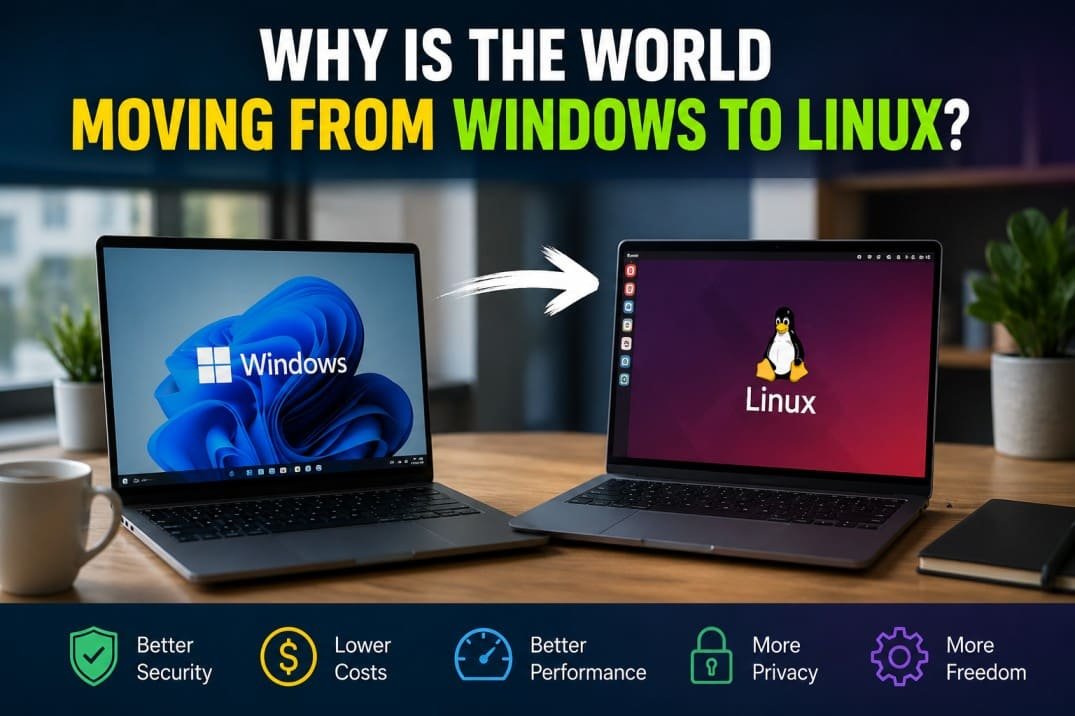
Transition from Windows to Linux
For nearly 40 years, Microsoft Windows has been the world’s most popular desktop operating system. From offices and schools to homes and government departments, Windows became the default choice for millions of users. But over the last decade, a noticeable shift has begun. More developers, businesses, educational institutions, and even governments are moving from Windows to Linux.
This transition is not happening because Windows suddenly stopped working. Instead, people’s priorities have changed. Security, privacy, cost savings, performance, and digital independence have become far more important than they were in the past. Linux is increasingly seen as an operating system that offers greater control and flexibility while avoiding many of the limitations of proprietary software.
As cloud computing, artificial intelligence, cybersecurity, and open-source technology continue to grow, Linux is becoming one of the most influential operating systems in the world.
Why Is the World Moving from Windows to Linux?
The biggest reason is that Linux offers users more control over their computers. Unlike Windows, which is developed and controlled by Microsoft, Linux is open source. This means anyone can view, modify, and improve its source code.
Many users are also frustrated by Windows’ frequent updates, advertisements, hardware requirements, and increasing dependence on Microsoft accounts. Linux provides an alternative that is often lighter, faster, and more customizable. Businesses appreciate Linux because it reduces licensing costs, while developers prefer it because most modern cloud infrastructure runs on Linux.
Windows vs Linux: The Core Difference
Windows is a proprietary operating system created by Microsoft. Users must follow Microsoft’s licensing terms and rely on the company for updates and support.
Linux is an open-source operating system maintained by a global community of developers and organizations.
Popular Linux distributions include:
- Ubuntu – beginner-friendly and widely used
- Debian – known for stability
- Fedora – popular among developers
- Red Hat Enterprise Linux – widely used by large companies
Because Linux is open source, innovation often happens faster and users have more freedom.
Linux Security Is a Major Advantage
One of the strongest arguments for Linux is security.Windows has historically been the primary target for malware because of its large market share. Linux uses a stricter permission system and benefits from constant review by security experts around the world.
Linux advantages include:
- Strong user permissions
- Open-source security auditing
- Faster security patches
- Lower malware infection rates
- Better isolation between applications
This is why many banks, cloud providers, research institutions, and government servers rely heavily on Linux.
Linux Costs Much Less
Cost is another important factor driving adoption.Windows licenses can become expensive for organizations managing hundreds or thousands of computers. Most Linux distributions are completely free.
Companies save money through:
- No licensing fees
- Lower maintenance costs
- Reduced antivirus expenses
- Longer hardware lifespan
For schools, startups, and government departments, these savings can be substantial.
Linux Runs Better on Older Computers
Windows 11 introduced strict hardware requirements, leaving many older computers unable to upgrade officially.Linux provides a practical solution. Lightweight distributions such as Linux Mint, Lubuntu, and Xubuntu can run smoothly on older hardware.
Benefits include:
- Faster boot times
- Lower RAM usage
- Better CPU efficiency
- Improved battery life
- Less background activity
Many users discover that an old laptop feels new again after installing Linux.
Developers Prefer Linux
Linux has become the dominant platform for software development.Popular programming tools work exceptionally well on Linux, including Python, Java, Rust, Go, Node.js, Docker, and Kubernetes.Most cloud servers also run Linux. Services such as AWS, Google Cloud, Microsoft Azure, and Oracle Cloud primarily host Linux-based systems.For developers, using Linux locally often matches the environment used in production.
Linux Powers the Cloud and AI
Many people use Linux every day without realizing it.Linux powers a large portion of the internet, including cloud infrastructure, web hosting platforms, supercomputers, and AI research clusters.Artificial intelligence frameworks such as TensorFlow and PyTorch are heavily optimized for Linux environments. As AI adoption grows, Linux becomes even more important.
Privacy Concerns Are Pushing Users Toward Linux
Privacy has become a major issue for many computer users.Critics of Windows often point to telemetry collection, advertising integration, Microsoft account requirements, and cloud synchronization features.Linux distributions generally collect far less data and give users greater control over updates, permissions, and system behavior.For privacy-conscious users, this is a significant advantage.
Linux Is Highly Customizable
Another reason people switch is customization.Linux allows users to change almost every aspect of the operating system, including the desktop environment, file manager, themes, and system services.Popular desktop environments include GNOME, KDE Plasma, Cinnamon, and XFCE.Users can make Linux look and behave almost exactly how they want.
Businesses Are Adopting Linux Rapidly
Companies increasingly view Linux as a secure and scalable platform.Industries using Linux extensively include cloud computing, banking, telecommunications, healthcare, manufacturing, and cybersecurity.Enterprise Linux distributions provide long-term support and professional services, making them attractive for large organizations.
Governments Are Exploring Linux
Several governments around the world have explored Linux to reduce dependence on foreign proprietary software.
Their goals often include:
- Lower software costs
- Greater transparency
- Improved cybersecurity
- Stronger digital sovereignty
Countries such as Germany, France, India, Brazil, and China have used Linux in various government projects over the years.
Linux Gaming Has Improved
Gaming was once Linux’s biggest weakness, but the situation has changed dramatically.Valve’s Steam Deck runs Linux, and Steam Proton allows thousands of Windows games to work on Linux with minimal setup.Graphics driver support from NVIDIA, AMD, and Intel has also improved significantly.Windows still has broader game compatibility, but the gap is much smaller than it used to be.
Challenges of Switching to Linux
Linux is not perfect.
Some users may face a learning curve, especially if they are accustomed to Windows. Certain specialized professional applications, including some Adobe products, may not run natively on Linux.However, for web browsing, office work, programming, studying, media consumption, and many everyday tasks, Linux now offers an excellent experience.
Best Linux Distributions for Beginners
If you want to try Linux, these are excellent starting points:
- Ubuntu – easiest for beginners
- Linux Mint – familiar for Windows users
- Fedora – great for developers
- Debian – extremely stable
- Pop!_OS – excellent for gaming and productivity
Will Linux Replace Windows?
Linux is unlikely to completely replace Windows in the near future. Windows remains dominant in many corporate desktop environments, gaming, and certain professional software categories. However, Linux is already the leading operating system for servers, cloud computing, artificial intelligence, and many development environments. Instead of replacing Windows entirely, Linux is becoming the preferred choice for an increasing number of specialized and professional workloads.
The Future of Linux
Several trends suggest Linux will continue growing:
- Expansion of AI infrastructure
- Growth of cloud computing
- Rising cybersecurity concerns
- Increasing demand for privacy
- Open-source innovation
- Pressure to reduce IT costs
Organizations such as the Linux Foundation continue investing heavily in the ecosystem
Final Thoughts
The world is moving from Windows to Linux because computing priorities have changed. Users increasingly value security, privacy, performance, customization, and affordability. Linux delivers these benefits through its open-source model, efficient performance, strong developer ecosystem, and growing enterprise adoption. Windows will remain important for many years, but Linux has firmly established itself as the backbone of modern cloud computing, artificial intelligence, servers, cybersecurity, and software development. For individuals, businesses, and governments seeking greater control and lower costs, Linux is no longer just an alternative, it is becoming a preferred choice.
The rapid evolution of artificial intelligence is also changing software development, as discussed in our guide on AI technology trends
The growing adoption of Linux is also transforming the business landscape by helping organizations reduce software costs, improve cybersecurity, and accelerate digital transformation. Read more insights on business covered by PrabhNews.
Governments and enterprises across the globe are increasingly adopting open-source technologies to strengthen digital infrastructure and data security. Stay updated with global technology and policy developments in our World section.
Leave a Reply