
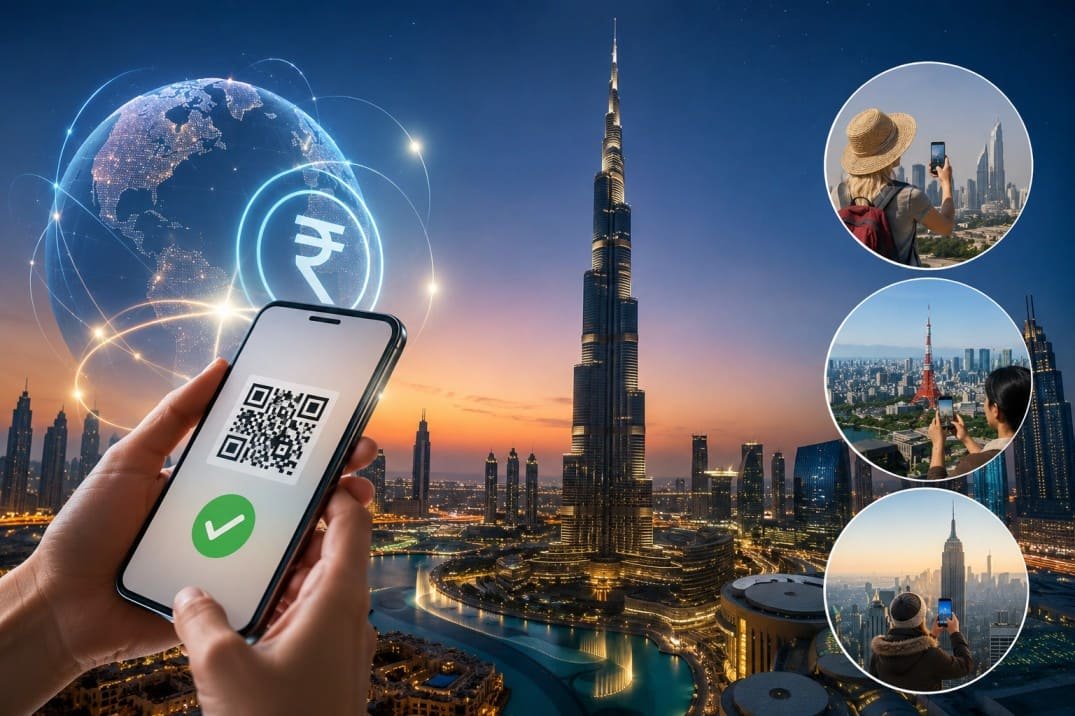
Planning a trip to Dubai has reached a major milestone in global travel convenience. Millions of travelers can now experience effortless travel booking right from their smartphones. NPCI International Payments Limited partnered with NEOPAY and Emaar Entertainment to Launch online UPI payments for At the Top, Burj Khalifa.
This shift changes how international tourists plan their iconic tower visits before even boarding a flight.
What are Online UPI Bookings for Burj Khalifa?
This initiative allows Indian tourists to secure At the Top, Burj Khalifa entry passes using Unified Payments Interface platforms like PhonePe, Paytm, or Google Pay. It marks the very first GCC e-commerce integration for UPI on an international tourist attraction website. Travelers can browse ticket tiers, select peak sunset slots, and pay directly from their domestic Indian bank accounts without needing international debit or credit cards.
Why global destinations are shifting toward local digital wallets
International tourism hubs are adapting to digital payment preferences. Traditional cross-border transactions often cause friction due to bank authorization failures, high foreign exchange markup fees, and missing OTP notifications on international roaming networks. Accepting instant digital payment gateways eliminates these payment barriers. India represents one of the largest tourist markets for Dubai, making localized financial integrations a smart move for global venues.
What is the impact of this global payment shift?
The strategic integration of global digital payments is transforming the cross-border travel experience by making international bookings faster, cheaper, and more convenient for tourists. By enabling travellers to use familiar real-time payment systems such as UPI, visitors can potentially avoid some of the foreign-exchange conversion charges and payment markups associated with traditional international card transactions, while receiving faster confirmation in their own currency.
This is particularly useful for popular attractions where tickets and preferred time slots can sell out quickly, allowing tourists to secure bookings before arriving in the UAE. Beyond convenience for individual travellers, the development could encourage other major tourist attractions and global landmarks to adopt international real-time payment interfaces, creating a more connected digital tourism ecosystem. Overall, the rollout highlights how fintech is reducing payment barriers in international travel, making experiences at iconic destinations increasingly accessible through something as simple as scanning a QR code or tapping a smartphone. Dubai welcomed 19.59 million international overnight visitors in 2025, up 5% year-on-year, showing continued growth in the city’s tourism sector. In January 2026 alone, Dubai recorded 2 million international overnight visitors, representing a 3% increase compared with January 2025.
UPI’s Expanding Reach: From Local Kirana Stores to a Global Payment Footprint
The Unified Payments Interface (UPI), developed by the National Payments Corporation of India (NPCI), has evolved from a domestic digital payment platform into an increasingly important component of India’s global fintech strategy. In India, UPI has become the backbone of everyday digital payments, handling billions of transactions every month and enabling instant bank-to-bank payments through apps such as Google Pay, PhonePe, BHIM and Paytm. Its international expansion is taking place through NPCI International Payments Limited (NIPL), with Indian travellers increasingly able to use UPI for merchant payments in countries such as the UAE, Singapore, Bhutan, Nepal, Sri Lanka, Qatar, Cambodia, France, Mauritius and Greece.
Instead of relying entirely on international cards or carrying foreign currency, travellers can scan supported QR codes and make payments directly from their Indian bank accounts, making transactions faster and potentially reducing payment and currency-conversion friction. UPI’s international ambitions also extend beyond tourism through cross-border payment linkages such as India’s connection with Singapore’s PayNow, enabling faster person-to-person transfers. At the same time, UPI One World allows eligible foreign visitors to India to make QR-based payments through a prepaid wallet, expanding the system’s usefulness for inbound tourism. Together, these developments demonstrate how UPI is moving beyond being simply an Indian payment system and becoming part of a broader cross-border digital payments ecosystem, with the potential to make international travel, remittances and everyday transactions more seamless.
Is there a increase in tourists?
The introduction of online UPI bookings for the Burj Khalifa can significantly improve the travel experience for Indian tourists visiting Dubai by reducing payment friction, lowering dependence on international cards, and making advance ticket booking more convenient. Travellers can use familiar Indian payment apps such as PhonePe, Google Pay, Paytm and BHIM instead of relying on international credit or debit cards, potentially reducing problems related to card declines, OTP delays and international transaction restrictions. UPI payments may also help travellers avoid some of the foreign-exchange markups and processing charges associated with international card transactions, particularly for families purchasing multiple tickets. More importantly, online booking allows tourists to secure preferred dates and popular observation-deck time slots, including high-demand evening and sunset periods, before travelling to Dubai. The digital process also reduces the need to carry large amounts of cash or exchange money specifically for attraction tickets, while instant electronic ticket confirmation makes entry faster and more convenient. Overall, UPI integration makes the Burj Khalifa experience more seamless for Indian tourists by combining familiar payments, easier advance planning, potentially lower transaction costs and greater convenience.
What next for international payments?
The integration of online UPI payments for global landmarks like the Burj Khalifa marks a major shift in cross-border travel and financial accessibility. By removing payment failures, foreign exchange fees, and card dependencies, this initiative gives Indian travelers direct, stress-free access to world-class experiences straight from their domestic bank accounts.
With 55.49 crore UPI users as of June 2026 and 24,162 crore transactions worth ₹314 lakh crore processed in FY2025–26, UPI has become one of the world’s largest real-time payment networks. For Indian travellers, paying directly in INR can reduce dependence on international cards and avoid some foreign-exchange markups that can add 2–4% or more to overseas card purchases, depending on the card.The opportunity for international tourism businesses is substantial. India recorded more than 24 crore outbound departures in FY2025–26, while the Middle East accounted for nearly 50% of Indian departures in Q3 2025. If even 1% of those outbound travellers used UPI-enabled bookings or payments, that would represent millions of potential transactions. For attractions, airlines, hotels and retailers, localized payment options could therefore improve checkout conversion, reduce payment friction and make India’s rapidly expanding outbound-travel market easier to serve.
Other global tourism hubs, venue operators, and international payment networks should take note and implement similar localized digital payment options. Adopting real-time payment interfaces like UPI allows international businesses to tap directly into one of the world’s fastest-growing outbound travel markets, reduce ticket bounce-rates at checkout, and offer a frictionless, digital-first experience that modern travelers expect.


Leave a Reply