
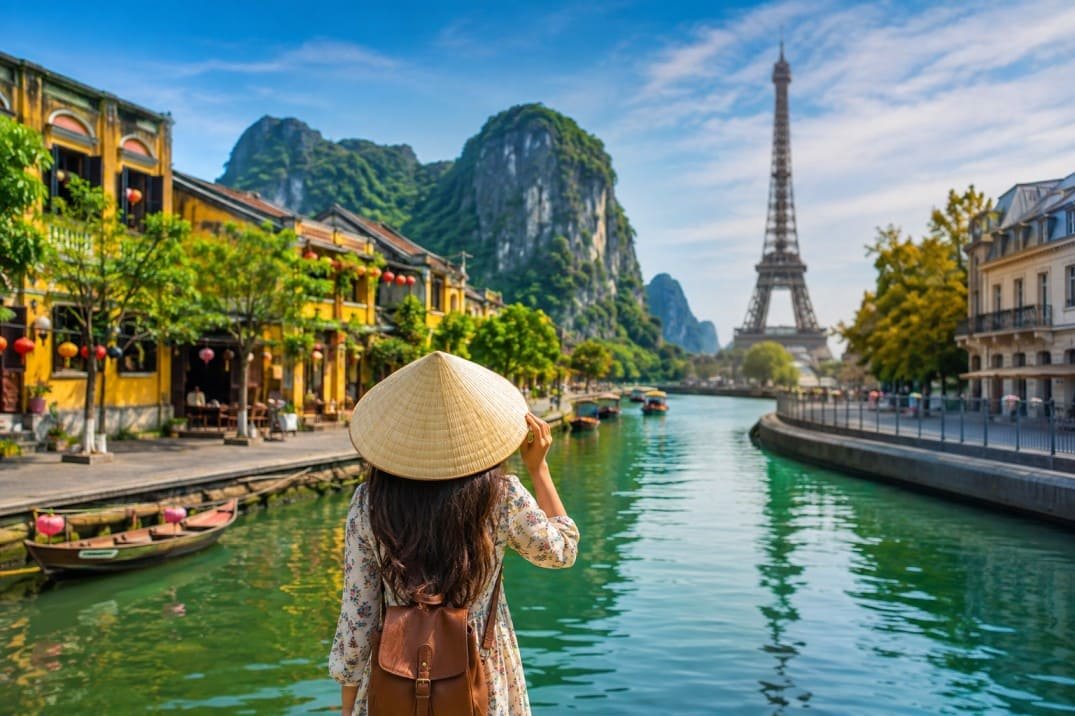
Today, we see many indians posting their fancy trips on bali, Phillipeans. The only question arises is why people are taking trips to these countries this often?
The bustle of Ho Chi Minh City, the emerald karsts of Ha Long Bay, the vibrant street markets of Bangkok, and the serene cliffside retreats of Bali are welcoming record numbers of Indian visitors. Regional airlines are adding daily routes, hospitality brands are curating specialized dining options, and local markets are adapting to meet the preferences of Indian guests. A budget friendly trip that every indian wishes to visit.
This migration marks more than just a temporary trend; it signals a permanent realignment in outbound tourism. Convenience, freedom, and exceptional value now dictate modern travel decisions, cementing Southeast Asia as the world’s favorite playground for Indian explorers.
What Is the Surge in Indian Tourists Choosing Vietnam Over Europe?
Indian tourists choosing Vietnam over Europe represents a major demographic realignment in global leisure travel. Vietnam welcomed nearly 750,000 Indian tourists in 2025, marking a 49% annual jump. Data for 2026 shows Indian arrivals soaring by another 43%, cementing Vietnam as one of the fastest growing foreign destinations for outbound Indian travelers.
Why Indian Travelers Are Flocking to Vietnam
Lengthy Schengen visa delays, complex appointment systems, and rising euro expenses have pushed Indian vacationers to seek frictionless travel options. Vietnam offers an ultra-fast online e-visa processed within 24 to 48 hours, eliminating months of administrative stress. Expanded direct flight networks connecting Delhi, Mumbai, and Kolkata to Hanoi and Ho Chi Minh City make short-haul travel effortless. Daily ground expenses in Vietnam run up to 60% lower than Western alternatives, offering luxury hospitality, limestone bays, and rich culinary culture at a fraction of European costs.
What Is the Impact of This Travel Shift?
This preference is reshaping regional economics and global airline routes. Carriers are expanding direct flight capacities between major Indian hubs and Vietnamese coastal cities. Hospitality groups across Vietnam are actively adapting by incorporating Indian dietary preferences, establishing dedicated wedding venues, and expanding vegetarian cuisine options.
This movement proves that seamless accessibility and immense value now dictate modern travel choices, making Vietnam the ultimate tropical holiday destination.
Why Indian Travelers Are Flocking to Vietnam
Lengthy Schengen visa delays, complex appointment systems, and rising euro expenses have pushed Indian vacationers to seek frictionless travel options. Vietnam offers an ultra-fast online e-visa processed within 24 to 48 hours, eliminating months of administrative stress. Expanded direct flight networks connecting Delhi, Mumbai, and Kolkata to Hanoi and Ho Chi Minh City make short-haul travel effortless. Daily ground expenses in Vietnam run up to 60% lower than European alternatives, offering luxury hospitality, limestone bays, and rich culinary culture at a fraction of Western costs.
Cost Comparison: Vietnam vs. Europe (7-Day Trip per Person from India)
| Expense Category | Vietnam (Mid-Range) | Europe / Schengen (Mid-Range) | Difference / Savings |
|---|---|---|---|
| Visa & Insurance | ₹2,500 – ₹3,500 | ₹10,000 – ₹15,000 | ~75% cheaper |
| Return Flights | ₹20,000 – ₹30,000 | ₹55,000 – ₹85,000 | ~60% cheaper |
| Accommodation (6 Nights) | ₹12,000 – ₹20,000 (3–4★ hotels) | ₹45,000 – ₹80,000 (Basic 3★/Hostels) | ~70% cheaper |
| Food & Dining | ₹6,000 – ₹10,000 | ₹25,000 – ₹45,000 | ~75% cheaper |
| Local Transport | ₹4,000 – ₹7,000 (Grab/Taxis/Buses) | ₹15,000 – ₹28,000 (Trains/Metro passes) | ~70% cheaper |
| Activities & Sightseeing | ₹8,000 – ₹15,000 (Cruises, cable cars) | ₹20,000 – ₹35,000 (Museums, day tours) | ~50% cheaper |
| Total Estimated Spend | ₹52,500 – ₹85,500 | ₹1,70,000 – ₹2,88,000 | Save ₹1.1L – ₹2L+ per head |
Cinematic Charm and Iconic Global Landmarks
Decades of Indian cinema have deeply embedded European landscapes into the national subconscious. Films featuring idyllic Swiss meadows, historic Roman streets, and picturesque Spanish coastlines have created a lasting cultural romance with the continent. Seeing landmarks like the Eiffel Tower, the Colosseum, or the Swiss Alps in person offers Indian travelers a tangible connection to the cinematic dreams they grew up watching.
Seamless Multi-Country Exploration via Schengen
One of Europe’s greatest practical advantages is its political and regional connectivity. A single Schengen visa unlocks access to 29 European countries without the hassle of internal border controls. Coupled with high-speed rail networks like the Eurail, tourists can effortlessly transition across distinct cultures, architectures, and languages within a matter of hours on a single vacation.
Temperate Climate, Luxury Retail, and Familiar Comforts
Europe provides a welcoming escape from India’s intense summer heat, offering cool alpine breezes, Mediterranean sea views, and historic fairytale towns. High-net-worth travelers are drawn to global fashion capitals like Paris and Milan for premier tax-free shopping. Crucially, a long-standing Indian diaspora across major European hubs ensures that traditional Indian, vegetarian, and Jain dining options are readily available, giving travelers the luxury of exploring foreign sights while enjoying home comfort on their plates.
While Vietnam is leading the charge, several other destinations are witnessing a massive surge in Indian tourists who are pivoting away from Western Europe. The core motivators remain the same: frictionless visa policies, shorter flight times, high rupee purchasing power, and budget-friendly luxury. Western Europe. The core motivators remain the same: frictionless visa policies, shorter flight times, high rupee purchasing power, and budget-friendly luxury.
Top Alternatives to Europe for Indian Travelers
Beyond Vietnam, Indian vacationers are increasingly pivoting toward accessible, high-value destinations like Thailand, Georgia, Azerbaijan, Indonesia, and Kazakhstan as hassle-free, easy,alternatives to Western Europe.
Driven by extended visa exemptions, instant e-visas, and short-haul direct flights under five hours, these countries eliminate the heavy administrative anxieties and steep financial barriers associated with Schengen applications. From the Swiss-like alpine landscapes of Almaty and the cobblestone European charm of Baku to the luxury private pool villas of Bali and Phuket, these nations deliver world-class hospitality, rich cultural diversity, and unmatched rupee purchasing power,proving that seamless entry and affordability now define the future of Indian outbound travel.
Evolving Habits Defining the Modern Indian Traveler
Additionally, with over 60% of outbound growth now originating from Tier 2 and Tier 3 cities, Indian travelers across the country are seeking high-value luxury,maximizing their purchasing power to secure five-star hospitality and private experiences at accessible prices.
Ultimately, this dramatic realignment in global tourism proves that the modern Indian holidaymaker values freedom, flexibility, and tangible experiences above traditional travel prestige. As long-haul barriers remain high, the seamless charm, cultural warmness, and high-value luxury offered by nearby tropical destinations have permanently rewritten the playbook for Indian outbound travel.
Leave a Reply